Views: 0 Author: Site Editor Publish Time: 2026-04-18 Origin: Site
The underground mining sector is entering a decisive period. Between 2025 and 2030, demand for efficient, safer, and lower-emission equipment is expected to reshape procurement decisions across hard-rock mining operations. For many mines, Underground Loaders remain at the center of that conversation because they directly affect loading cycles, haul efficiency, operator safety, ventilation requirements, and total cost of ownership. At the same time, the broader mining environment is being influenced by rising demand for critical minerals, tighter scrutiny of diesel emissions underground, and a stronger push toward automation and electrification. Rather than treating loaders as isolated machines, operators are increasingly evaluating them as part of an integrated production system that includes digital fleet control, battery strategy, ventilation planning, and maintenance capability. That shift is likely to define the underground mining equipment market over the next five years.
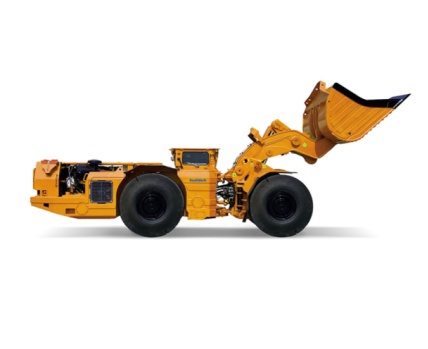
In underground mines, loaders do more than move material. They influence cycle time, stope productivity, traffic patterns, and operating conditions for the entire haulage network. OEM product portfolios also show how central this category has become: major suppliers now offer underground loaders across multiple payload classes and in both diesel and electric formats, reflecting the need for mines to match machine selection with drift size, orebody geometry, and production strategy. Epiroc, for example, offers underground loaders in the 4-to-18-tonne range, while Sandvik’s lineup spans diesel, battery-electric, and cable-electric options for underground hard-rock mining.
This matters in the current cycle because the mining industry is not only seeking more tons per hour. It is also trying to reduce exposure to diesel particulate matter, improve labor productivity, and operate with greater flexibility as mines go deeper and ventilation becomes more expensive. Underground loaders sit at the intersection of all three pressures.
The medium-term outlook for underground equipment is closely tied to metals needed for electrification, transmission, batteries, and industrial infrastructure. According to the IEA’s 2025 outlook, demand for key energy minerals continues to grow across scenarios, with copper remaining the largest established market and projected demand rising by 30% by 2040 in the Stated Policies Scenario. The same outlook notes that supply-demand concerns remain especially acute for copper, even as prospects for some other minerals improve if announced projects are delivered on time.
For equipment suppliers and mine operators, that does not automatically mean every segment expands at the same speed. It does suggest, however, that underground projects tied to copper, nickel, polymetallic deposits, and other strategic materials will remain highly relevant through 2030. In practical terms, that supports continued interest in loader fleets that can deliver high utilization, reliable service intervals, and compatibility with digital or electric mine plans. This is an inference based on mineral-demand and supply-risk trends rather than a single equipment forecast, but it is a reasonable one.
Battery-electric underground loaders are no longer niche demonstration units. Major manufacturers now position them as production-ready machines for mine development and ore handling. Epiroc’s electric underground loaders cover payload capacities from 4 to 18 tonnes, and several models are specifically marketed as automation-ready.
Automation has shifted from single-machine tele-remote control toward multi-machine orchestration. Sandvik states that its AutoMine Multi-Lite system allows one operator to supervise multiple automated loaders and trucks, while Epiroc’s fleet automation and Deep Automation platforms are designed for autonomous mission control, traffic management, and remote supervision in underground production areas.
In December 2024, ICMM members committed to further measures to protect underground workers from diesel particulate matter exposure. ICMM’s guidance frames DPM as a major underground health and operational issue, reinforcing why equipment decisions are increasingly linked to air quality and emissions strategy rather than purchase price alone.
The diesel-versus-electric discussion is often simplified, but underground buyers are actually comparing operating ecosystems. Diesel machines still matter because they are familiar, supported by established maintenance teams, and often easier to integrate into existing mine infrastructure. They can remain the pragmatic option where charging systems, power distribution, or battery logistics are not yet ready. OEMs continue to sell diesel underground loaders broadly, including advanced emission technologies for regulated markets.
Electric loaders, however, are gaining momentum because they promise more than lower tailpipe emissions. ABB notes that ventilation systems in underground mines can account for up to 50% of total energy consumption in a production cycle, and ventilation-on-demand systems can reduce overall energy usage by up to 50% depending on the mine. Sandvik also emphasizes that battery-electric equipment can reduce ventilation requirements partly because electric drivetrains generate less heat than internal combustion equipment.
That is why battery-electric Underground Loaders are especially attractive in deeper mines or operations where cooling, ventilation, and worker exposure are major cost drivers. Still, adoption speed will depend on power infrastructure, duty cycles, drift size, and whether the operator prefers battery swap, fast charging, or a mixed fleet model. Through 2030, the industry is likely to see a blended market rather than a full diesel exit.
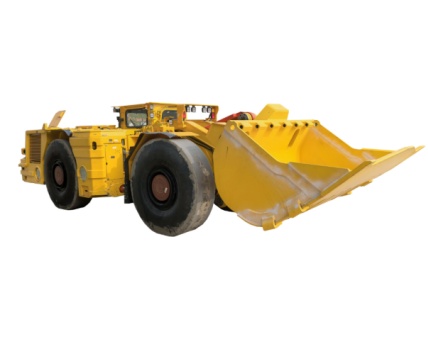
Not every underground mine needs the same loader philosophy. A narrow-vein operation, a large-scale stoping mine, and a block-caving project can all define “best value” differently. The table below summarizes how the market is increasingly segmenting loader decisions.
Mine Scenario | Loader Priority | Likely Power Preference | Key Buying Focus |
Narrow-vein or restricted drifts | Compact size, maneuverability | Diesel or smaller battery-electric | Turning radius, visibility, service access |
Mid-size production mine | Balanced payload and uptime | Mixed fleet | Cost per tonne, parts support, operator comfort |
Deep underground operation | Heat and ventilation reduction | Battery-electric | Ventilation savings, charging/swapping plan, safety |
Large automated production zone | High utilization and integration | Diesel-electric mix or battery-electric | Automation readiness, fleet control, traffic management |
Expansion or mine modernization project | Scalable platform | Increasingly electric-ready | Lifecycle cost, retrofit compatibility, digital systems |
This segmentation is consistent with how OEMs describe their product ranges: multiple payload classes, diesel and electric choices, and stronger emphasis on automation compatibility rather than one-size-fits-all equipment selection.
A useful way to read the market is to focus on decision criteria rather than headlines. Over the next five years, the most competitive underground equipment suppliers are likely to be those that can combine reliable hardware with strong aftermarket support and a realistic transition path.
Watch these areas closely:
· Energy model: mines will compare diesel cost stability against the infrastructure demands of battery-electric fleets.
· Ventilation economics: deeper mines will continue to examine loader selection through the lens of airflow and cooling costs.
· Automation pathway: future-ready mines will prefer loaders that can be upgraded into digital fleet environments rather than replaced too early.
· Application fit: payload, profile, and duty cycle will matter more than broad “electric vs. diesel” marketing claims.
From our perspective, the underground mining equipment market between 2025 and 2030 will reward practical innovation over fashionable claims. Underground Loaders will remain one of the most strategic assets in underground operations because they influence productivity, ventilation demand, emissions exposure, and the pace of automation adoption all at once. The strongest buyers will be those who choose equipment according to real mine conditions: orebody geometry, ramp profile, service capability, production targets, and long-term energy strategy. We believe the next phase of market growth will not be defined by a single “best” technology, but by how effectively mines combine diesel, electric, and digital systems into a workable fleet plan. For readers who want to evaluate loader configurations, compare application scenarios, or understand which direction makes the most sense for an upcoming project, it is worth learning more from RockMech(Yantai) Heavy Machinery Co.,Ltd and speaking with a team that understands underground equipment from a practical operating perspective.
Underground Loaders, often referred to as LHDs, are used to load, haul, and dump ore or waste material in underground mines. They are central to mine development and production because they connect blasting zones with haulage and ore-handling systems.
Not yet. The market is moving toward electrification, but diesel loaders remain important in many mines because infrastructure, charging strategy, site layout, and budget constraints vary widely. Through 2030, mixed fleets are likely to remain common.
Automation improves remote supervision, traffic coordination, and machine utilization in production areas. Major OEM platforms now support multi-machine management, showing that automation is increasingly becoming a fleet-level operating strategy rather than a single-machine upgrade.
Buyers should focus on application fit, lifecycle cost, ventilation impact, automation readiness, and local service support. The right decision depends less on headline technology and more on whether the machine matches the mine’s actual operating conditions and future expansion plan.