Views: 0 Author: Site Editor Publish Time: 2026-04-16 Origin: Site
In modern mining, productivity underground depends heavily on how efficiently broken ore, waste rock, and materials can be moved through narrow tunnels and confined work areas. Among the most important machines in this process are Underground Loaders, which are specifically engineered to work safely and effectively below the surface. Unlike surface loading equipment, these machines are built for low-profile spaces, rough ground conditions, and demanding duty cycles. Their role goes far beyond simply moving material from one place to another. They help shape the pace of the operation, influence labor efficiency, reduce downtime, and support the overall economics of underground mining projects. For anyone new to the industry, or for operations looking to upgrade equipment, understanding what Underground Mining Loaders are and how they function is essential to making informed decisions.
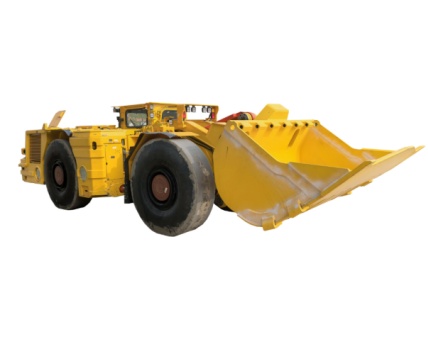
Underground Mining Loaders are specialized machines used to load, haul, and dump blasted rock or ore in underground mines. In many operations, they are also called LHD Loaders, which stands for Load-Haul-Dump. This name accurately describes their primary purpose: they scoop material from the mine face, transport it through underground drifts or tunnels, and dump it into ore passes, trucks, or designated stockpiles.
These loaders are different from standard wheel loaders used above ground. Their dimensions, structure, articulation, and protective systems are all adapted to underground conditions. A typical underground loader has a compact body, a reinforced bucket, strong traction, and a design that allows it to operate in low-clearance areas. Since underground mines often present poor visibility, restricted turning radii, steep gradients, and harsh environments, every aspect of the loader must support safe and continuous performance.
In short, Underground Loaders are one of the core machines that keep material handling moving efficiently in underground mining.
Without dependable loading equipment, underground production quickly slows down. Drilling and blasting may fragment the ore, but that ore still needs to be removed quickly so the next cycle can begin. This is where underground loaders become indispensable.
Their importance can be seen in several areas:
· They shorten the mucking cycle after blasting.
· They reduce manual material handling in hazardous zones.
· They improve coordination between mining stages.
· They support higher daily output and better equipment utilization.
In a competitive mining environment, small improvements in loading efficiency can create major gains over time. A well-matched underground loader helps reduce idle time, improve haulage flow, and maintain smoother production planning. For mine managers, choosing the right machine is not only a technical issue but also a strategic one.
At the most basic level, an underground loader works by approaching broken material, filling its bucket, transporting the load, and discharging it where needed. However, the actual performance of the machine depends on a combination of hydraulic power, articulation, bucket design, traction, braking, and operator control.
The operating cycle usually follows this sequence:
1. The loader travels to the blasted face.
2. The bucket penetrates and gathers the loose rock.
3. The machine reverses and turns within limited space.
4. The material is hauled to a dump point or transport unit.
5. The bucket is raised and emptied.
6. The loader returns for the next cycle.
Because underground environments are more restrictive than surface sites, machine maneuverability is critical. Many Underground Mining Loaders use articulated steering, which allows the front and rear frames to pivot for tighter turning. This is especially useful in narrow drifts where conventional turning is not possible.
Several factors affect how efficiently the loader performs underground:
This determines how much material can be moved per cycle. The right capacity depends on drift size, ore density, and haul distance.
Some underground loaders use diesel engines, while others use battery-electric or cable-electric systems. The power choice affects ventilation needs, emissions, and operating cost.
This measures the loader’s ability to dig into compacted or coarse rock material. Higher breakout force can improve loading efficiency in tough ground conditions.
A well-designed cabin, ergonomic controls, and monitoring systems contribute to safer and more productive operation.
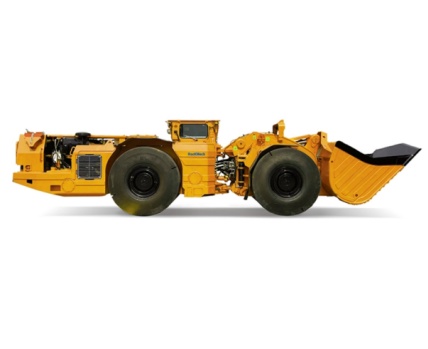
Not all underground loaders are the same. Mines vary in size, ore body geometry, ventilation capacity, and production scale, so loaders are available in multiple configurations.
Diesel models remain common in many underground mines because they are powerful, proven, and suitable for heavy-duty operations. They are often favored where ventilation systems are already established and where long operating hours require high machine endurance.
Electric and battery-powered Underground Loaders are becoming more popular as mines seek to reduce emissions, heat generation, and ventilation costs. These machines can improve underground working conditions and align with sustainability goals.
These are designed for mines with limited vertical clearance. Their compact height allows them to work in low-seam environments where standard machines cannot operate efficiently.
Some modern operations use remote-controlled or semi-autonomous loaders in hazardous zones. These systems can reduce operator exposure in unstable or high-risk areas.
The performance of Underground Mining Loaders depends on robust engineering. While model specifications vary, several core features are especially important.
Feature | Why It Matters | Typical Benefit |
Compact frame design | Fits narrow tunnels and tight corners | Better maneuverability underground |
Reinforced bucket | Handles abrasive rock and repeated loading cycles | Longer service life |
Articulated steering | Supports turning in confined areas | Improved operational flexibility |
Heavy-duty axles and tires | Withstands rough ground and heavy loads | Greater durability |
ROPS/FOPS protection | Protects operators from rollover or falling objects | Improved safety |
Efficient hydraulic system | Powers lifting, tilting, and steering functions | Faster cycle times |
Emission or electric power options | Meets site environmental requirements | Lower ventilation burden |
In addition to these features, many advanced models now include onboard diagnostics, load weighing systems, camera monitoring, and telematics. These technologies help operators and managers track machine performance, schedule maintenance, and improve fleet efficiency.
Underground Loaders are used across a wide range of mining and tunneling applications. Their flexibility is one reason they remain central to underground material handling.
In hard rock mining, loaders are commonly used for mucking blasted ore and transporting it over short distances to trucks or ore passes. In gold, copper, lead, zinc, and nickel mines, they often work continuously as part of the production cycle.
In development headings, underground loaders remove waste rock after blasting so crews can proceed with scaling, ground support, and drilling. This makes them important not only in production zones but also in mine expansion work.
They are also used in:
· Underground construction projects
· Tunneling operations
· Hydropower development
· Infrastructure excavation
· Backfilling and rehandling material underground
Because they combine loading and short-distance haulage in a single machine, underground loaders are especially useful where space, time, and coordination are limited.
So, what are Underground Mining Loaders? They are much more than compact machines for moving rock. They are a central part of underground productivity, safety, and operational continuity. From traditional diesel LHDs to modern electric and intelligent models, Underground Loaders continue to evolve as mines demand better efficiency, lower emissions, and stronger reliability in confined underground conditions. Understanding their function, structure, applications, and selection criteria is the first step toward choosing equipment that truly fits the job.
From our perspective, the best equipment decisions come from matching machine capability with real working conditions rather than relying on general specifications alone. At RockMech(Yantai) Heavy Machinery Co.,Ltd, we believe underground operations need loaders that are practical, durable, and designed around actual mining challenges. If you are evaluating Underground Loaders for a new project or planning to upgrade your current fleet, it is worth taking time to compare the machine’s capacity, safety features, power system, and support options in detail. For readers who want to understand more about loader configurations, mining applications, or suitable equipment solutions, you can contact RockMech(Yantai) Heavy Machinery Co.,Ltd for further information and product guidance.
An underground loader is specially designed for confined underground spaces. It usually has a lower profile, tighter turning capability, stronger protection systems, and features suited to underground ventilation and safety requirements.
Not in every case. Electric models offer lower emissions and may reduce ventilation costs, but diesel machines are still widely used where high power output, proven endurance, and existing infrastructure make them the better fit.
LHD stands for Load-Haul-Dump. It refers to a type of underground mining loader that scoops material, transports it underground, and dumps it at a selected discharge point.
The right bucket size depends on tunnel dimensions, ore density, fragmentation, haul cycle requirements, and the mine’s production target. Oversizing the bucket is not always efficient if space or maneuverability is limited.