


Views: 0 Author: Site Editor Publish Time: 2026-04-28 Origin: Site
Mining operations rarely succeed by relying on one-size-fits-all equipment decisions. When choosing Underground Loaders, mine operators must balance productivity, operating costs, ventilation demands, maintenance complexity, energy availability, and long-term expansion plans. Among the most debated options are pneumatic and electric rock loaders. Both have proven value in underground applications, yet each one performs best under different site conditions. A decision that looks economical on paper may become expensive underground if it does not match the mine’s depth, ore body layout, duty cycle, or infrastructure. That is why understanding the practical differences between these loader types is essential before making an investment.
Underground Loaders play a direct role in the speed, safety, and efficiency of material handling below ground. They are used to gather blasted rock, transfer ore, clear drifts, and support continuous production in confined mining environments. Because underground conditions are more restrictive than surface operations, loader selection has a stronger impact on operational performance.
A well-matched loader can help mines reduce delays, improve cycle times, and lower equipment downtime. On the other hand, an unsuitable machine can lead to bottlenecks, excessive maintenance, poor energy efficiency, or operator fatigue. In many mines, loaders operate in narrow passages, wet conditions, dusty stopes, and areas with limited airflow. These realities make the choice between pneumatic and electric systems more than a technical preference; it becomes a strategic operating decision.
Pneumatic rock loaders are powered by compressed air. They have long been used in underground mining, especially in sites where compressed air systems are already established. Their mechanical design is often valued for robustness and adaptability in harsh working conditions.
One reason pneumatic loaders remain relevant is their suitability for environments where electrical infrastructure may be limited or where operators prefer air-powered systems for specific safety or maintenance reasons. In certain mines, especially older operations, compressed air is already available for drills and auxiliary equipment, making pneumatic rock loaders a practical extension of the existing system.
Typical strengths of pneumatic loaders include:
· Reliable operation in wet or humid conditions
· Reduced dependence on onboard electrical components
· Strong compatibility with traditional underground mine systems
· Simple operating principles in many applications
However, compressed air systems are not always energy efficient. Air leakage, pressure loss, and compressor operating costs can make pneumatic equipment more expensive over time if the mine is not optimized for air delivery.
Electric rock loaders use electric motors as their primary power source. Depending on the design, they may be cable-powered, battery-powered, or connected to a mine’s electrical network through specific systems. In recent years, electric Underground Loaders have gained attention because mines are under increasing pressure to improve energy efficiency, reduce emissions, and create better underground working conditions.
Electric machines are often chosen for mines that want cleaner operation, lower ventilation burdens, and smoother power delivery. They are especially attractive in deeper mines, where ventilation costs rise quickly and where diesel alternatives can create additional heat and emissions challenges. Even compared with pneumatic systems, electric loaders can offer better overall energy conversion efficiency in many operating scenarios.
Electric rock loaders are often associated with:
Electric systems do not rely on compressed air exhaust in the same way pneumatic equipment does, and they often help create a more controlled working environment.
Depending on the model and work cycle, electric loaders may reduce the noise burden for operators compared with compressor-driven or heavily air-powered systems.
Electric motors typically provide efficient power transmission, especially where the mine has reliable electrical infrastructure.
That said, electric loaders also require careful planning. Cable management, battery charging logistics, component protection, and technical service capability all need to be considered before deployment.
The best choice depends on how a mine defines performance. For some operations, ruggedness and simplicity are the priority. For others, energy use, ventilation savings, and automation potential matter more.
Below is a side-by-side comparison to help clarify the main differences.
Factor | Pneumatic Rock Loaders | Electric Rock Loaders |
Power source | Compressed air | Electric motor / cable / battery |
Energy efficiency | Generally lower due to compressor losses | Generally higher |
Ventilation impact | Moderate, depending on total system use | Often lower overall burden |
Suitability for wet conditions | Strong in many cases | Good, but requires electrical protection |
Maintenance focus | Air lines, valves, seals, compressors | Motors, controls, cables, batteries |
Initial infrastructure | Useful where air system already exists | Best where electrical system is stable |
Noise level | Can be higher due to air discharge/compressors | Often lower in operation |
Long-term operating cost | Can rise with air inefficiency | Often more favorable over time |
Automation compatibility | More limited in many traditional setups | Better potential in advanced mines |
This table does not mean one option is always better. It shows that performance depends on the mine’s existing infrastructure and long-term operating model.
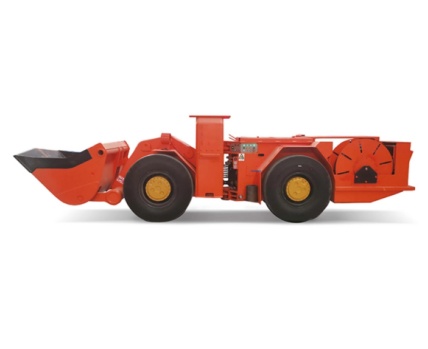
Safety is one of the most important decision factors in underground mining equipment selection. Both pneumatic and electric loaders can support safe operations, but they do so in different ways.
Pneumatic rock loaders are often appreciated in environments where simplicity is valued and where mines are accustomed to handling air-powered systems. In some cases, mines view compressed-air-driven equipment as easier to manage in wet headings or difficult ground conditions. If the workforce is already trained on pneumatic maintenance and the infrastructure is mature, safety performance can be strong.
Electric loaders, however, are increasingly preferred in mines aiming to reduce heat, improve air quality management, and modernize underground operations. Better energy efficiency often translates into less system waste, and cleaner equipment strategies can help lower environmental stress in enclosed areas. When paired with proper electrical safety design, electric loaders can improve both operator comfort and workplace control.
From a practical point of view, safety depends on:
· The quality of operator training
· Site-specific ventilation design
· Equipment maintenance discipline
· Ground and water conditions
· The mine’s emergency response capability
Many mine operators initially focus on purchase price. While that matters, it should not be the only factor. The real question is total cost of ownership.
Pneumatic rock loaders may appear attractive when a mine already has compressed air infrastructure. In that case, the transition cost can be low, and maintenance teams may already understand the system. But over time, compressed air can become expensive. Generating and distributing compressed air is energy-intensive, and small leaks across the network can create hidden operating losses.
Electric loaders may involve higher initial planning requirements, especially if charging, cable routing, or electrical upgrades are needed. Yet they often provide better long-term operating economics through lower energy waste and improved system efficiency. In operations with long production horizons, these savings can become significant.
A useful way to compare costs is to ask:
1. What infrastructure already exists underground?
2. How many hours per day will the loader operate?
3. What is the mine’s current energy cost profile?
4. How expensive is ventilation at depth?
5. What level of technical support is available on-site?
There is no universal answer to the question of whether pneumatic or electric rock loaders are better. Pneumatic models continue to offer value where compressed air systems are already well established and where mines need straightforward, durable equipment for demanding underground conditions. Electric models, meanwhile, are becoming increasingly attractive for operators who want better energy efficiency, lower ventilation burden, and a clearer path toward modern underground mining practices. The right decision depends on your mine’s layout, infrastructure, operating hours, workforce capability, safety priorities, and long-term production plan.
From our perspective, choosing Underground Loaders should be based on application fit rather than trend alone. At RockMech(Yantai) Heavy Machinery Co.,Ltd, we believe mine operators benefit most when equipment selection starts with real underground conditions, not just specification sheets. If you are comparing pneumatic and electric rock loaders for an upcoming project or equipment upgrade, it is worth taking a closer look at your mine’s needs, future expansion goals, and maintenance resources before deciding. For more information, many operators choose to learn more from RockMech(Yantai) Heavy Machinery Co.,Ltd as they evaluate practical loader solutions for underground operations.
The main difference is the power source. Pneumatic rock loaders use compressed air, while electric rock loaders use electric motors. This affects energy efficiency, maintenance needs, and infrastructure requirements.
Not always. Electric loaders often have lower long-term operating costs, but that depends on the mine’s electrical infrastructure, duty cycle, and service capability. In some mines, pneumatic systems may still be more practical.
Electric loaders are often favored in deeper mines because they can help reduce ventilation-related operating pressure and improve overall energy efficiency. However, final selection should still depend on site-specific conditions.
A mine should compare infrastructure, energy cost, maintenance resources, ventilation demands, production targets, and future development plans. The best loader is the one that fits both current operations and long-term strategy.


