


Views: 0 Author: Site Editor Publish Time: 2026-04-24 Origin: Site
In 2026, mining operations are under more pressure than ever to improve uptime, control costs, and protect both equipment and personnel in demanding underground environments. For many operators, the conversation is no longer limited to how fast a machine can move material or how much payload it can handle. The bigger question is how to keep critical assets running consistently without waiting for breakdowns to happen. That is where predictive maintenance has become one of the most important shifts in underground mining. Although the title focus is on underground trucks, the same operational logic now extends across the full fleet, including Underground Loaders, haulage units, and support machines. Instead of relying purely on fixed service intervals or reactive repairs, mining companies are increasingly using machine data, condition monitoring, and performance trends to make smarter maintenance decisions before failures disrupt production.
The mining sector has always dealt with harsh conditions, but underground operations create especially difficult challenges. Equipment works in confined areas, under heavy loads, in wet, dusty, and high-impact environments. A single unexpected failure in an underground truck can delay transport cycles, affect downstream loading schedules, and increase labor pressure across the shift. When several machines are linked in the same production chain, one breakdown can quickly become a site-wide inefficiency.
Predictive maintenance is gaining momentum because it addresses this issue at the source. Instead of waiting until a transmission overheats, a brake system weakens, or a hydraulic line shows obvious failure, operators can identify abnormal patterns much earlier. This reduces emergency repairs, lowers unplanned downtime, and supports more stable planning for parts, labor, and machine availability.
In 2026, another reason this trend is accelerating is the growing expectation for digital visibility. Site managers want clearer answers to practical questions: Which machines are most likely to fail next? Which components are wearing faster than expected? Which units should be serviced during planned downtime rather than pulled from production unexpectedly? Predictive maintenance helps answer those questions with evidence instead of guesswork.
For years, many mines relied on preventive maintenance schedules based on operating hours. That method still has value, but it is not always enough in modern underground operations. Two underground trucks may have the same number of service hours while experiencing very different levels of stress. One may be operating on steeper gradients, carrying heavier cycles, or working in more abrasive conditions than the other.
This is why condition-based maintenance is becoming a more practical model. Predictive strategies combine scheduled servicing with real-time equipment health indicators. Rather than replacing parts too early or too late, maintenance teams can act when data shows a clear sign of degradation.
A more advanced approach does not simply track time; it tracks behavior. It looks at temperature changes, pressure variations, vibration levels, oil quality, fuel efficiency, braking response, and cycle consistency. When analyzed together, these factors create a clearer picture of machine health.
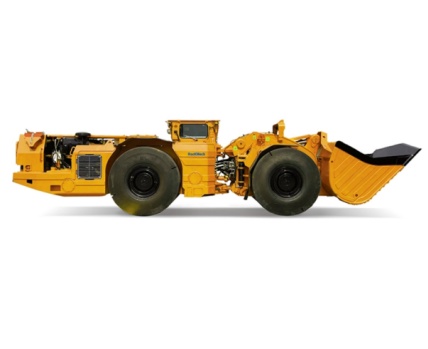
Underground trucks are central to this discussion because haulage reliability has a direct impact on production output. But in practice, the trend is broader. Underground Loaders are equally important because loading and hauling are closely connected. If a loader experiences hydraulic inefficiency, bucket response delays, or traction problems, the truck cycle is affected. If haul trucks are unavailable, loaders may idle longer or face material flow interruptions.
That is why more mining sites are beginning to manage underground trucks and Underground Loaders as part of one connected fleet strategy rather than separate machine categories. Predictive maintenance works best when the operation sees the fleet as an integrated system.
· Underground trucks
· Underground Loaders
· Drilling rigs
· Support vehicles
· Ventilation and auxiliary mobile units
This wider view helps maintenance teams understand not just individual failures, but also how equipment conditions affect overall mine productivity.
Predictive maintenance sounds advanced, but its value comes from monitoring very practical machine conditions. In underground trucks and Underground Loaders, several systems tend to provide the strongest early warning signals.
Engine load, fuel consumption, transmission temperature, and torque irregularities can reveal performance decline before a major fault appears.
Hydraulic pressure instability, flow irregularities, and temperature spikes often indicate wear in pumps, seals, valves, or hoses.
Because underground haulage depends on reliable stopping power, brake wear, pressure response, and heat buildup are critical data points.
Repeated shock loads, uneven road conditions, and high payload cycles can increase wear on tires, axles, articulation areas, and suspension components.
Modern mining equipment relies on controllers, harnesses, sensors, and communication modules. Predictive maintenance also includes watching for irregular signals, voltage drops, and system communication faults.
These data points do not all need to come from highly complex systems. Even relatively simple monitoring can create useful maintenance insights when data is reviewed consistently.
The table below highlights why many underground operations are shifting from reactive or fixed-interval maintenance to predictive models.
Maintenance Approach | Main Trigger | Typical Benefit | Main Limitation |
Reactive Maintenance | Repair after failure | Low planning effort upfront | High downtime and disruption |
Preventive Maintenance | Service at set intervals | Better than waiting for failure | May replace parts too early or miss real issues |
Predictive Maintenance | Data and condition trends | Better uptime, targeted repairs, improved planning | Requires monitoring tools and process discipline |
For underground trucks and Underground Loaders, the advantage of predictive maintenance is not that it replaces all existing methods. Its strength is that it improves maintenance timing. It helps mines intervene earlier, with greater confidence, and often at lower total cost.
One of the biggest mining trends in 2026 is that data is no longer viewed as something only analysts need. It is becoming part of daily fleet decisions. Supervisors, planners, technicians, and equipment managers all benefit when machine information is easier to read and act on.
For example, if a haul truck repeatedly shows rising transmission temperature during loaded uphill cycles, that trend can be investigated before it becomes a stoppage. If an Underground Loader shows slower hydraulic response across several shifts, maintenance teams can inspect the system before production quality drops. These actions may seem small in isolation, but multiplied across a fleet, they lead to major gains in machine availability.
In many sites, the real value comes from pattern recognition. One incident may not tell much. Ten similar incidents across similar units can reveal a design stress point, an operating habit, or an environmental factor that needs attention. Predictive maintenance therefore supports not just repairs, but continuous operational improvement.
As mining continues to move toward smarter and more connected operations, predictive maintenance is becoming less of an optional innovation and more of a practical standard. For underground trucks, the benefits are clear: fewer unexpected failures, stronger maintenance planning, and more reliable haulage performance. But the broader lesson in 2026 is that these gains are strongest when the entire mobile fleet is included. Underground Loaders, too, are essential to the flow of production, and their condition should be monitored with the same level of attention. From our perspective, the most effective mining fleets are the ones that combine robust machine design with smarter service strategy. At RockMech(Yantai) Heavy Machinery Co.,Ltd, we believe mining companies should evaluate equipment not only by output capacity, but also by how well it supports long-term reliability, maintainability, and data-informed operation. For teams looking to understand more about underground equipment solutions and fleet performance planning, it is worth learning more from RockMech(Yantai) Heavy Machinery Co.,Ltd and exploring which approach best fits the real conditions of the mine.
Predictive maintenance is a maintenance strategy that uses machine condition data, operating trends, and performance signals to identify possible issues before equipment fails. In underground mining, it helps reduce unplanned downtime and improve fleet reliability.
Underground Loaders and underground trucks work as part of the same production cycle. If loader efficiency drops, truck utilization is affected as well. That is why predictive maintenance is most effective when applied across the connected fleet.
The most commonly monitored systems include engine performance, transmission behavior, hydraulic pressure, brake condition, electrical health, and structural stress points. These systems often show early signs of wear before a major failure occurs.
No. While large mines may have more advanced digital systems, smaller operations can also benefit from predictive maintenance by starting with basic condition monitoring, regular data review, and focused maintenance planning on key equipment.


