Views: 0 Author: Site Editor Publish Time: 2025-09-09 Origin: Site
Electric loaders give power right away and react fast. This makes them good for jobs that move quickly. Diesel loaders work well for long hours and hard work. They give strong power and last a long time. Electric loaders cost less to run because they have fewer parts. They also need less fixing. Picking the best loader depends on what your project needs. You should think about air quality, how much power you need, and your budget.
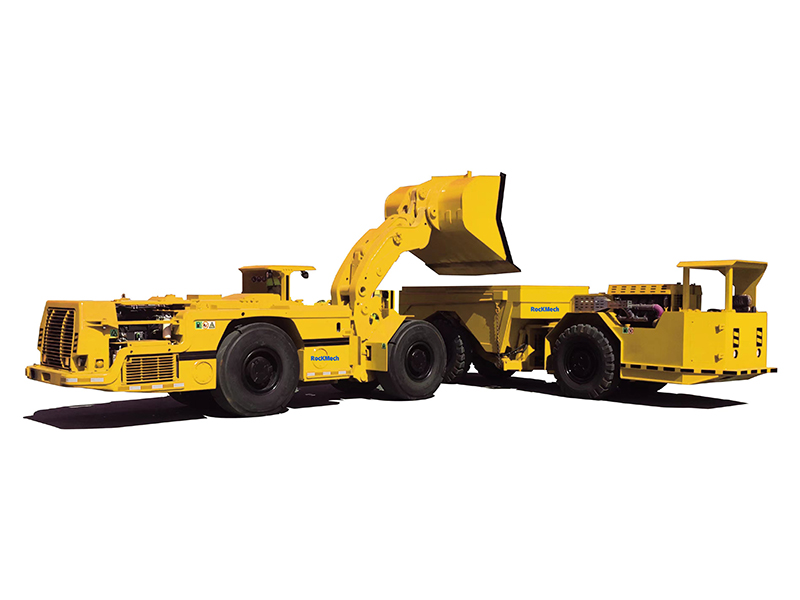
Diesel underground loaders have helped mining and construction for many years. These machines use a diesel engine for power. The diesel engine gives strong force, so it works well for hard jobs. Many places still use diesel loaders, especially where air rules are not strict.
Here is a table that lists the main parts of a diesel wheel loader:
Component | Description |
|---|---|
Chassis | Keeps the loader steady and stops it from tipping. |
Power Source | Diesel engine gives strong force and saves fuel. |
Loading Bucket | Made from strong stuff to scoop and carry heavy things. |
Hydraulic System | Uses fluid under pressure to lift and move the bucket. |
Transmission | Moves power from the engine to the wheels for easy driving. |
Operator Cab | Built for comfort and safety, and lowers noise and shaking for you. |
Diesel loaders are liked because they work long hours and handle tough jobs. You can trust a diesel wheel loader to work well in underground mining.
Note: Diesel loaders are still common, but more companies want cleaner choices now.
Electric underground loaders are changing mining and construction work. These machines use new battery technology to power electric motors. Electric machines give instant force, fast action, and cost less to run. Electric wheel loader models are quiet and do not make exhaust smoke.
Electric construction equipment has many good points:
Workers are safer because there is no bad exhaust.
Work gets done faster with quick cycles and less waiting.
Mining costs go down because there are fewer parts and less fixing.
The working part of an electric underground loader has a bucket, boom, rods, rocker arm, swing cylinder, and lifting cylinder. When you use an electric machine, you lower the boom and put the bucket in the pile. The bucket turns to pick up stuff, then the lifting cylinder raises the boom to dump it. The swing cylinder tips the bucket to let things out. Automatic leveling helps you put the bucket back to dig again.
Electric heavy machines use a control system with CAN bus technology. This system gives you live data and quick problem checks. The hydraulic system uses electro-hydraulic pilot control for smooth and easy work.
Today, electric construction machines and electric underground mining equipment are getting more popular everywhere. Many companies pick electric wheel loader models and electric construction equipment to help the planet. Electric underground mining equipment keeps growing as battery technology gets better and makes these machines work even more.
Diesel and electric loaders give power in different ways. Diesel loaders have engines that give steady power for hard jobs. Electric loaders use motors that give instant torque. This means electric loaders start fast and respond quickly.
Here is a table to show the main differences:
Feature | Diesel Loaders | Electric Loaders |
|---|---|---|
Power Output | High power for tough jobs | Strong motors with quick torque |
Torque Specifications | High torque for rough ground | Fast torque and quick starts |
Efficiency | Lower energy efficiency | Better efficiency, uses less energy |
Both types give high torque. Electric loaders reach full torque right away. This helps you move things fast in small spaces. Diesel loaders are good for long jobs that need steady power.
RockMech Underground Loaders are strong in this area. They have high breakout force for tough materials. Their safety systems help keep you safe while working.
Productivity is very important in mining. Diesel and electric loaders both move lots of material. Electric wheel loader models speed up fast. This means each loading cycle is quicker. You do not wait for full power.
Diesel loaders can work longer without stopping. This helps if you need to work all day. RockMech loaders have strong parts and hydraulic systems. These features help you work more and stop less.
Here are ways RockMech loaders help you work better:
High breakout force lets you lift heavy loads fast.
Anti-wear plates on the bucket last longer, so you fix less.
Electric wheel loaders have faster cycles because of instant torque. This helps you finish jobs quickly, especially in short tunnels.
Flexibility matters when working underground. Comparing diesel lhd and electric lhd loaders helps you choose.
Electric loaders are good in mines with little air flow. They do not make exhaust, so air stays clean.
Diesel loaders are best for big jobs needing strong power and steady work.
Electric wheel loader models help you meet green goals. They work well if you have steady power.
Diesel loaders work well in rough places and can run without breaks.
RockMech loaders give even more flexibility. Their turning radius is 5 meters, so you move easily in tight tunnels. The cabin has HEPA filters to keep you safe and comfortable. Automatic grade compensation keeps you steady on slopes.
Think about your mine’s needs when choosing. If you want clean air and fast cycles, pick electric wheel loader models. If you need long work time and strong power, diesel loaders are best. RockMech gives you both choices for underground work.
When you compare diesel and electric loaders, you notice cost differences. Diesel equipment usually costs less to buy. Many companies pick diesel because it fits their budget. You can get diesel machines fast. You do not need special charging stations for diesel. Electric equipment costs more at first. You pay extra for batteries and charging systems. Electric machines need new things like charging points and power lines. Some places have these, but many do not. If you want electric equipment, you must plan for these changes. RockMech sells both diesel and electric machines. You can pick what works for your project and budget. Diesel is good if you want to save money now. Electric may help you save more in the future.
RockMech electric machines give you longer service times. You get steady supply and low failure rates. You spend less time fixing machines and more time working. Electric equipment helps you keep your project moving.
Tip: If you want less downtime and lower repair costs, pick electric equipment for your underground and construction jobs.
Diesel machines still work well for many jobs. You can trust diesel machines to handle tough tasks. If you need strong power and long run times, diesel is a good choice. Electric machines are best if you want easy maintenance and lower costs.
It is important to think about emissions when picking loaders. Diesel loaders let out a lot of CO2 and other bad gases. These gases can fill the air in underground places. Electric loaders do not make tailpipe emissions. This means the air stays cleaner and safer for workers. The table below shows how diesel and electric loaders are different:
Power Source | Energy Consumption | Ventilation Savings | |
|---|---|---|---|
Diesel | High | High | Low |
Electric | Low | Low | High |
Diesel loaders also make nitrogen oxides, particulate numbers, and elemental carbon. These can build up in small spaces. You might see diesel particulate matter above 0.1 mg/m³. This can be bad for your health. Electric loaders do not make these emissions. You do not need as much ventilation with electric loaders. Zero tailpipe emissions help you reach green goals and keep your team safe.
Noise is another thing to think about. Diesel loaders can be very loud. Electric loaders are much quieter. This makes your work area safer and more pleasant.
Electric loaders also help with safety. They do not use combustion engines or flammable fuel. You do not have to worry about fires or high heat. Zero tailpipe emissions mean less danger to your health and a safer place to work.
Many places have strict rules for emissions and noise. In the United States, the noise limit is 90 dB(A) for an 8-hour shift. Australia and Canada have rules like this too. If you use diesel loaders, you may need a hearing program. Electric loaders help you stay under these limits. Zero tailpipe emissions make it easier to meet air quality rules. Picking electric loaders helps you protect the planet and follow the latest laws in mining and construction.
Think about how long your loader works before refueling or charging. Diesel loaders run for 8 to 10 hours. You can finish a shift without stopping much. Refueling takes time, but you do not do it often. Electric loaders, need charging during the shift.
Aspect | Diesel Loaders | Electric Loaders |
|---|---|---|
Runtime | 8 to 10 hours before refueling | Needs charging during the shift |
Charging/Refueling | Refueling takes time, but not often | Charging needed during slow times |
Pick the right loader for your job. Diesel loaders work best in big tunnels and long shifts. They handle tough jobs in large spaces. Electric loaders are good for short jobs or shallow mines. They recharge fast and help save air costs in deep mines. If your mining operation is relatively short in distance, then an electric loader would be more suitable for you.
Diesel loaders are best for big tunnels and long shifts.
Electric loaders work well for short jobs or shallow mines.
Deep mines save air costs with electric loaders.
Using electric loaders for short-distance mining operations is very convenient.
RockMech loaders help in tight tunnels and tough places. The curved bucket design stops 20% more spillage. You get easy fixes with standard parts. Strong steel frames and cold-start features keep your loader working. A worker from a gold mine in South Africa said: "Handles sloped tunnels and sticky ore better than other loaders."
Check if your site has what your loader needs. Electric loaders need charging stations and steady power. You also need good battery care to keep them working well. Diesel loaders do not need charging stations. You must plan for fuel storage and delivery.
Requirement | Electric Loaders | Diesel Loaders |
|---|---|---|
Charging Infrastructure | Needs charging stations and steady power | No charging needed |
Battery Management | Important for good performance | Not needed |
Energy Costs | Higher from charging, but saves money | Lower, but fuel costs more |
Electric loaders are safer. You get less noise and cleaner air. This helps keep your team safe underground.
When you choose between diesel and electric loaders, you need to look at several important factors. Each factor can affect your costs, safety, and how well your team works. The table below shows the main things you should think about:
Decision Factor | Description |
|---|---|
Total Cost of Ownership (TCO) | This includes the price to buy, run, and fix the loader. |
Maintenance Costs | Think about how much you will spend on repairs and upkeep. |
Operational Efficiency | Check how well the loader does its job and how it helps your team work faster. |
Environmental Impact | Look at how much pollution or emissions the loader makes. |
Safety Considerations | Think about how the loader affects worker health and safety, especially with air quality. |
Ventilation Costs | Electric loaders need less air flow, which saves money on ventilation. |
Miner Health and Safety | Electric loaders make less noise and fewer emissions, which helps keep miners healthy. |
Performance Characteristics | Diesel loaders may work better in some places because of existing equipment and systems. |
Tip: Make a list of your top needs before you pick a loader.
You should match your loader choice to your mine’s needs. Here are some steps to help you decide:
Pick the type of loader that fits your site. For most underground jobs, you need a loader with strong tires and chains.
Think about the power you need. Diesel loaders are often chosen for their steady and reliable power.
Look at the transmission. Most loaders use hydraulic-mechanical systems for smooth work.
Check the brakes. Good brakes keep your team safe.
RockMech gives you many options for different mining jobs. For example, the CY-2 model works well in large and medium mines. The CY-3 model is a classic choice for moving 12-20 tons of ore. You can find a loader that matches your needs, whether you want diesel or electric power.
Model | Description | Suitable for |
|---|---|---|
CY-2 | Designed for large and medium-sized mines | Mining operations |
CY-3 | Classic model for 12-20 ton underground ore | Mining operations |
If you want strong, steady power for long shifts, diesel loaders are a good choice. If you want lower emissions, less noise, and savings on ventilation, electric loaders are the way to go. RockMech offers both, so you can choose what works best for your underground mining project.
When you look at diesel and electric loaders, you notice big differences. Electric loaders help follow strict rules because they make less pollution. They also help save money on air systems. The air stays cleaner, and the work area is safer. Diesel loaders are strong and work well in hard mining jobs.
Electric loaders make less pollution and less heat.
Diesel loaders are good for tough jobs.
Both types have good safety features.
Factor | Diesel Loader | Electric Loader |
|---|---|---|
Performance | Strong breakout force | Works well, less pollution |
Safety | Good safety systems | Needs less air flow |
Pick the loader that matches your mine’s needs. You can trust RockMech for great quality and new ideas.
Electric loaders give you quick power and do not make emissions. They help you save money on fuel. The air stays cleaner for everyone working underground.
Electric loaders can be used in most mines. They are best in places where clean air is important. They work well if there are charging stations and short shifts.
Electric loaders cost more when you first buy them. But you save money later because they use less energy and need less fixing.
Yes, RockMech loaders are safe for underground jobs. They have strong safety systems like tough frames. These features help protect workers in hard underground places.