


Views: 0 Author: Site Editor Publish Time: 2026-04-21 Origin: Site
In narrow vein mining, loader selection is rarely a simple matter of choosing the biggest bucket or the highest rated engine. Mines working in restricted drifts, low backs, irregular ore geometry, and dilution-sensitive stopes need machines that balance compact dimensions, maneuverability, traction, visibility, service access, and ventilation impact. That is why the 2026 conversation around Underground Loaders is increasingly centered on “right-sized” LHDs rather than merely larger units. For this review, we focused on models that are either explicitly positioned for narrow vein, small-drift, or low-seam work, or are commonly shortlisted for those duties based on their current manufacturer positioning and published specifications. Our ranking is editorial rather than laboratory tested, but it reflects the latest publicly available product information from major OEMs and the practical realities of narrow-vein operations.
Standard underground loaders can deliver excellent productivity in large development headings, but narrow vein mines are a different engineering problem. A machine that is too wide can increase wall sloughing, force overbreak, and raise dilution. A machine that is too tall may limit access in low-seam zones. Even when a loader technically fits, poor turning behavior or weak visibility can slow the cycle enough to erase any theoretical payload advantage. That is why low-profile and compact Underground Loaders remain critical for mines where every centimeter of drift width matters. Epiroc and Sandvik both explicitly market several smaller LHDs for narrow vein or limited-space conditions, while low-profile designs like the Scooptram ST7LP are purpose-built for low-seam applications.
Our ranking emphasizes five practical criteria: fit for narrow vein geometry, productivity per machine envelope, operator safety, maintenance accessibility, and relevance to current 2025–2026 product positioning. That last point matters. For example, Epiroc’s Scooptram ST4 is a new-generation compact loader launched in late 2025 for small drift and narrow vein mines, while the Scooptram ST2G remains a proven small-operation choice. Sandvik’s Toro LH202 and LH203 continue to stand out because they are specifically described for narrow-vein mining, with the LH202 optimized for tunnel widths of 2 to 2.5 meters and the LH203 suitable for tunnels narrower than 2 meters.
Rank | Model | Payload / Capacity | Key Dimension Advantage | Best Fit |
1 | Epiroc Scooptram ST4 | 4 t | Compact narrow-mine design | Best overall 2026 narrow vein pick |
2 | Sandvik Toro LH203 | 3.5 t | 1.5 m width, suitable for tunnels under 2 m | Ultra-tight drifts |
3 | Epiroc Scooptram ST7LP | 6.8 t | Back height only 1.6 m | True low-seam production |
4 | Sandvik Toro LH202 | 3 t | Optimized for 2–2.5 m tunnels | Small headings with low dilution pressure |
5 | Epiroc Scooptram ST2G | 4 t | Proven small-operation platform | Reliable legacy compact choice |
Comparison based on current manufacturer-published positioning and specifications.
If one model best captures where compact Underground Loaders are heading in 2026, it is the Epiroc Scooptram ST4. Epiroc positions it directly for small and narrow vein mines, and the company states that the machine was developed with customer input for small drift operations. What pushes the ST4 to the top of this list is not just its 4-tonne tramming capacity, but the scale of the update over the earlier ST2G platform: Epiroc reports up to two times faster bucket fill, a 25% boost in overall productivity, 45% higher loaded tramming speed on flat ground, and 26% higher average traction force compared with previous models. That is a meaningful step forward for mines that need compact equipment without accepting a major productivity penalty.
For mines working in very tight sections, the Sandvik Toro LH203 is one of the most compelling options on the market. Sandvik lists the machine at 7,100 x 1,500 x 1,900 mm, with a 3,500 kg capacity and 1.5–1.8 m³ bucket range. More importantly, Sandvik says it is engineered for narrow-vein mining and that its 1.5-meter machine width makes it suitable for tunnels narrower than 2 meters. That single number is enough to put the LH203 on many shortlists where stope geometry is unforgiving and dilution control is the real productivity metric.
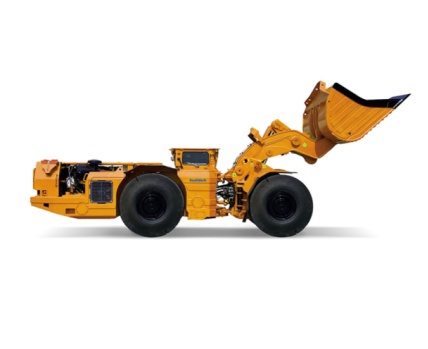
Some narrow vein mines are width-constrained. Others are height-constrained. For the second group, the Epiroc Scooptram ST7LP stands out immediately. Epiroc describes it as a low-profile underground loader with 6.8-ton capacity, built for low-seam applications, and the technical specification states that the machine has a back height of only 1.6 meters. That is exactly the sort of profile advantage that matters in low-back ore zones where conventional compact LHDs still sit too tall.
The Sandvik Toro LH202 remains one of the clearest narrow-vein loader propositions in the market. Sandvik says it is designed for narrow-vein mining, has a 3-tonne payload, and is optimized for tunnel widths of 2 to 2.5 meters. The published dimensions are 6,200 x 1,500 x 2,100 mm, with a 1.3–1.5 m³ bucket range. For mines operating in small headings where oversizing the loader can add dilution, tire damage, and awkward cycle behavior, the LH202 offers a very focused solution.
.
The Epiroc Scooptram ST2G is no longer the newest compact loader in this segment, but it still deserves a place in a 2026 review because the market does not always reward novelty over proven performance. Epiroc describes the ST2G as a 4-metric-tonne diesel loader built for small-sized operations and notes that it is especially effective at high altitudes. The company also points to easy daily service access, LED lighting, and a sturdy boom and load frame, all of which matter in mines that value dependable availability more than chasing every possible performance increment.
A “top 5” list is useful, but loader selection should still begin underground, not in marketing literature. In our view, buyers should weigh at least three issues before deciding among compact or low-profile Underground Loaders. The first is mine geometry: width, turn radii, back height, and expected muckpile behavior often matter more than nominal payload. The second is ventilation strategy: Stage V diesel options or smaller machines may reduce the ventilation burden in some operations. The third is service logistics: narrow vein mines often run lean maintenance teams, so access to daily service points, diagnostics, and parts consistency can change the real ownership cost more than a headline performance number.
A larger bucket does not automatically mean more ore delivered per shift. In narrow stopes, a machine that fits cleanly and loads consistently can outperform a theoretically larger unit that needs extra positioning time or causes more dilution. That is why models like the LH203 and ST7LP serve very different but equally important mine layouts.
As mines push for cleaner underground environments, engine standard and fuel compatibility increasingly matter. Epiroc’s ST4 is one of the clearest examples in this group, with Stage V availability and stated emissions benefits for underground air quality.
Fast daily inspection, camera systems, diagnostics, and safer access points are not small conveniences. In narrow vein operations, they directly support uptime and reduce the friction that builds up across every shift. Sandvik and Epiroc both emphasize service access and machine diagnostics across the loaders in this review.
The best Underground Loaders for narrow vein mining in 2026 are the ones that match the orebody instead of fighting it. Our overall shortlist puts the Epiroc Scooptram ST4 at the top because it combines compact narrow-mine positioning with clear performance gains, but the right answer can easily shift depending on whether your mine is constrained by width, height, ventilation, or maintenance staffing. The Toro LH203 is a standout for ultra-tight drifts, the Scooptram ST7LP is the strongest true low-profile choice here, and both the LH202 and ST2G continue to make practical sense in mines that need compact, proven LHD performance. From our perspective, good equipment selection starts with application fit, not brand slogans. At RockMech(Yantai) Heavy Machinery Co.,Ltd, we believe underground fleets should be chosen around actual tunnel geometry, operating conditions, and long-term cost control. RockMech says it focuses on underground trackless mining equipment, underground loader solutions for narrow tunnels, and mining customers across multiple regions, so readers comparing options for future projects can use the company as another reference point when they want to explore equipment direction in more detail or discuss a project-specific solution.
In many narrow vein operations, the best payload class is not necessarily the biggest one. Machines in the 3 t to 4 t class often provide a strong balance between maneuverability and output, while larger low-profile units make more sense when low back height is the main restriction rather than drift width.
Not always. A low-profile loader is ideal when seam height is the limiting factor, but in very narrow headings, width and turning envelope may matter more. That is why mines may choose something like the ST7LP for low-seam work, while others may prefer the LH203 for tunnels under 2 meters wide.
Because narrow vein mines often operate with limited maintenance windows and difficult access. Easy service points, onboard diagnostics, and camera-assisted operation help reduce downtime, improve safety, and keep cycle efficiency more stable over long shifts.
Buyers should compare machine width, height, turning behavior, and bucket movement envelope against real drift geometry, not only nominal tunnel size. A loader that “technically fits” may still perform poorly if corners, backs, or muckpile conditions are too tight. Reviewing dimensions alongside the intended mining method is usually more useful than comparing payload alone.


