Views: 0 Author: Site Editor Publish Time: 2025-10-10 Origin: Site
Did you know that valuable minerals like gold and diamonds are often hidden deep beneath the Earth's surface? While surface mining taps into shallow deposits, subsurface mining delves far deeper, accessing ore bodies that are otherwise unreachable.
In this article, we’ll explore what subsurface mining entails, the methods used, and the essential role of underground dump trucks. You'll also learn how this technique benefits both the environment and safety in mining operations.
Subsurface mining dates back to ancient times, with early mining practices involving manual labor to extract minerals from shallow underground veins. As technology advanced over the centuries, mechanical methods began to dominate the mining industry. In the 19th and 20th centuries, steam-powered engines, and later, diesel-powered machines, revolutionized the way miners extracted valuable resources. These innovations allowed mining to become faster, more efficient, and capable of accessing deeper deposits of minerals.
In the modern era, subsurface mining has become more sophisticated, with the use of advanced machinery, automation, and safety features. This progress has enabled mining operations to reach mineral deposits that were previously deemed unreachable, opening up new possibilities for resource extraction. Today, subsurface mining is a cornerstone of the mining industry, particularly for the extraction of high-value minerals such as precious metals and deep-seated ores.
Subsurface mining involves several key steps, including the creation of tunnels, shafts, and ventilation systems. These tunnels are typically dug horizontally (drift mining) or vertically (shaft mining) to reach deep ore bodies. Once these tunnels are established, workers can access the minerals and transport them to the surface using specialized machinery, including underground dump trucks. The process of subsurface mining is more complex than surface mining due to the technical challenges of operating underground. Mining operations must ensure the structural integrity of tunnels, provide adequate ventilation for workers, and manage the risks of gas emissions, such as methane. Additionally, the transportation of materials from the underground to the surface requires reliable equipment capable of navigating narrow and often hazardous tunnels.
One of the key differences between subsurface mining and surface mining is the limited disruption to the surface environment. Subsurface mining involves digging tunnels underground, which preserves the surface landscape above. This makes it particularly suitable for areas where environmental impact must be minimized, such as in regions with sensitive ecosystems or where land preservation is a priority.
Shaft mining involves creating vertical shafts to access deep ore bodies. This method is ideal for materials that are located deep beneath the Earth’s surface, where surface mining is not feasible. Shaft mining is commonly used for extracting coal, gold, and other metals found in deep veins. Once the shaft is dug, horizontal tunnels or “drifts” are constructed to reach the ore, which is then transported back to the surface.Shaft mining is a highly effective method for accessing deep mineral deposits, especially when the ore body is too far below the surface to be reached by surface mining techniques. The process of digging vertical shafts requires specialized equipment, such as shaft sinkers and hoisting systems, to safely transport materials from the mine to the surface. Shaft mining is labor-intensive, but it remains one of the most efficient ways to extract resources from great depths.
Drift mining involves the excavation of horizontal tunnels (drifts) to access mineral deposits located along the sides of hills or mountains. This method is particularly effective for accessing horizontal ore bodies, where the mineral deposit is situated along the natural formations of the terrain. Drift mining is often used to extract coal or other metals that lie along the slopes of hills or mountains.Unlike shaft mining, which requires the digging of vertical shafts, drift mining is less invasive and allows for easier access to ore bodies that lie close to the Earth's surface. This method is particularly useful in areas where the mineral deposit is located at a shallow to moderate depth. Drift mining is often used in conjunction with other mining techniques, such as shaft mining, to maximize the extraction of resources.
Slope mining uses inclined shafts or slopes to connect the surface to horizontal tunnels or ore bodies. This method is often used in cases where vertical shafts are impractical, either due to geological conditions or high operational costs. Slope mining provides a safer and more efficient way to access materials located at shallow to moderate depths, and it allows for a steady and continuous extraction process.Slope mining is particularly useful in operations where a vertical shaft would be too costly or difficult to construct. The inclined tunnels created in slope mining can provide more direct access to mineral deposits, reducing the time and cost associated with digging vertical shafts. Additionally, slope mining allows for easier transportation of materials to the surface, as the angle of the tunnel allows for a more natural flow of mined materials.
| Mining Method | Description | Depth Range | Suitability | Advantages |
|---|---|---|---|---|
| Shaft Mining | Vertical shafts are dug to access deep ore bodies. | Deep deposits (hundreds to thousands of meters) | Suitable for deep, concentrated ore bodies like coal and gold. | Effective for reaching deep mineral deposits. |
| Drift Mining | Horizontal tunnels constructed to reach ores on hillsides. | Shallow to moderate depths | Ideal for extracting minerals along the side of hills or mountains. | Less invasive, allows easier access to horizontal ore bodies. |
| Slope Mining | Inclined tunnels that connect the surface to mineral deposits. | Shallow to moderate depths | Useful for materials located at an angle beneath the surface. | More efficient than vertical shafts in some cases, easier transport of materials. |
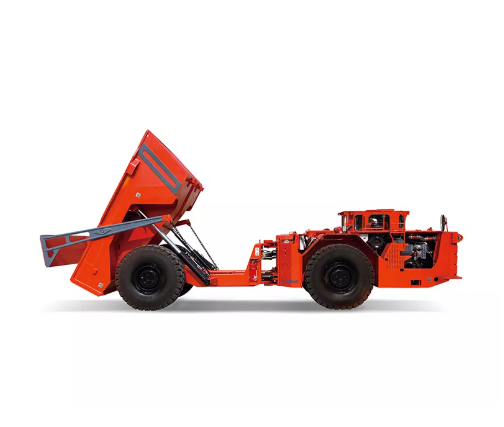
Underground dump trucks play a vital role in ensuring the smooth transport of mined materials from deep underground to the surface. These specialized trucks are designed to navigate the tight spaces and rough terrain typical in underground mining environments. The underground dump truck is equipped with a robust frame, large tires, and an open bed to carry significant loads, and it is built to withstand the harsh conditions found in mining tunnels. There are several types of underground dump trucks, including rigid and articulated models, each suited for different operational needs.
Articulated dump trucks are highly maneuverable, ideal for navigating narrow tunnels and steep inclines. Their ability to pivot at the midpoint allows them to easily navigate sharp corners and tight spaces.
Rigid dump trucks, on the other hand, are more robust and can handle heavier loads but are less flexible than articulated trucks. They are best suited for environments with relatively wider tunnels and flatter terrain.
Underground dump trucks are critical for improving efficiency, as they reduce the time it takes to transport mined materials, allowing mining operations to proceed without unnecessary delays. The use of these trucks enhances productivity, minimizes risks, and helps to streamline the flow of materials from extraction sites to surface facilities.
In subsurface mining, excavation and drilling equipment are essential for reaching deep mineral deposits. Drills are used to create shafts and tunnels that lead to the mineral deposits. Once the tunnels are in place, mining machines like continuous miners and roadheaders are used to extract the ore. These machines are designed to handle hard rock and soft rock, depending on the type of mineral being mined.
Safety is a key concern in subsurface mining. Tunnels must be reinforced with support structures such as steel beams, rock bolts, and mesh to prevent cave-ins. Ventilation systems are installed to ensure proper airflow and remove harmful gases. Safety monitoring equipment is also used to detect changes in air quality, temperature, and structural integrity, ensuring a safer working environment for miners.
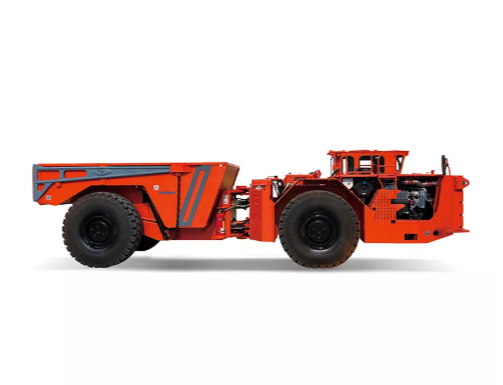
Underground dump trucks are crucial for transporting mined materials from deep underground to the surface. These trucks reduce the reliance on manual labor, speed up the transport process, and reduce the risks associated with underground mining operations. By ensuring the efficient movement of materials, underground dump trucks play an essential role in optimizing the mining process and improving overall operational efficiency.
Modern underground dump trucks are equipped with advanced technologies that improve fuel efficiency, reduce emissions, and enhance maneuverability. Features such as automated load control, stability monitoring, and GPS tracking systems help operators manage loads more effectively and avoid accidents. These trucks also minimize downtime, as they are designed for easy maintenance and quick repairs, keeping mining operations running smoothly.
Subsurface mining has a relatively smaller environmental footprint compared to surface mining, primarily because it causes less disruption to the surface landscape. Unlike surface mining, which can result in the destruction of vegetation, soil erosion, and habitat loss, subsurface mining involves digging tunnels underground, leaving the surface untouched. This makes subsurface mining a more environmentally friendly option in areas where preserving the surface ecosystem is a priority.
Safety is a major concern in underground mining, and underground dump trucks help mitigate some of these risks. By transporting materials efficiently and safely, these trucks reduce the number of trips workers need to make in potentially hazardous areas. Additionally, the use of modern safety equipment, such as roll-over protection and proximity sensors, further enhances the safety of underground operations.
One of the key advantages of subsurface mining is its ability to access deep, rich deposits of valuable minerals that surface mining cannot reach. Minerals such as gold, diamonds, and certain metal ores are often located deep beneath the Earth’s surface, and subsurface mining is the only way to extract these resources efficiently. The precision of subsurface mining techniques ensures that miners can extract the most valuable resources with minimal waste.
Subsurface mining significantly reduces the impact on the land surface compared to surface mining. Since the extraction occurs underground, there is no large-scale removal of vegetation or topsoil, preserving ecosystems and habitats above ground. This makes subsurface mining a more sustainable option for mineral extraction, especially in environmentally sensitive areas.
With the use of modern underground dump trucks and other advanced equipment, subsurface mining has become much safer. These trucks are designed to navigate challenging underground conditions, minimizing risks to operators and reducing the potential for accidents. The incorporation of technologies such as automated systems and real-time monitoring further enhances the safety and efficiency of mining operations.
Subsurface mining is essential for extracting deep mineral deposits that surface mining can't reach. With advanced techniques like shaft, drift, and slope mining, it ensures efficient and safe operations. The use of underground dump trucks is crucial in transporting materials effectively. This method preserves surface landscapes while providing access to valuable minerals. As technology advances, subsurface mining will continue to improve, contributing to a more sustainable future for the mining industry.
For advanced mining equipment and solutions, RockMech offers specialized products that ensure efficiency and safety in subsurface mining operations. Their unique approach focuses on enhancing mining processes, providing reliable and cost-effective solutions.
A: Subsurface mining is the extraction of minerals from deep underground using methods like shaft, drift, and slope mining.
A: Underground dump trucks efficiently transport mined materials through narrow tunnels, improving mining productivity.
A: Subsurface mining provides access to deep ore bodies, minimizes surface disruption, and enhances resource extraction efficiency.
A: Underground mining reaches deeper deposits, while surface mining extracts shallow mineral layers.