Views: 0 Author: Site Editor Publish Time: 2026-07-10 Origin: Site
Heavy equipment procurement demands massive capital expenditure. The global hauling equipment market continues to expand rapidly, meaning a single fleet-sizing error can permanently inflate cost-per-ton metrics. Selecting the wrong Mining Dump Truck creates immediate operational friction. Mismatched equipment leads directly to loading bottlenecks, excessive haul road degradation, and suboptimal fuel burn. Site managers cannot afford guesswork when configuring pit logistics.
This guide provides a technical evaluation framework for procurement teams and site managers. We outline how to align truck payload capacities, volumetric dimensions, and chassis types with specific mine site realities. You will learn how to match your hauling fleet perfectly with existing loading tools. Proper alignment maximizes mechanical availability, optimizes cycle times, and prevents unnecessary wear on both the loading equipment and the haul roads.
Loader-Truck Matching is Non-Negotiable: Optimal sizing relies on the "pass match" rule, typically aiming for 3 to 5 passes from an excavator or shovel to reach target truck payload.
Payload vs. Volume Discrepancies: A truck's rated weight capacity (tons) must be evaluated against its volumetric capacity (cubic meters) based on the specific material density of the ore or overburden being hauled.
Infrastructure Dictates Maximum Size: Ultra-class trucks offer the lowest cost-per-ton but require specialized haul road widths, specific grade limits, and oversized maintenance facilities.
Rigid vs. Articulated Applications: Articulated dump trucks (25–50 tons) dominate soft underfoot and steep, narrow conditions, while rigid haul trucks (60–400+ tons) are required for high-volume, well-maintained haulage routes.
Table of Contents
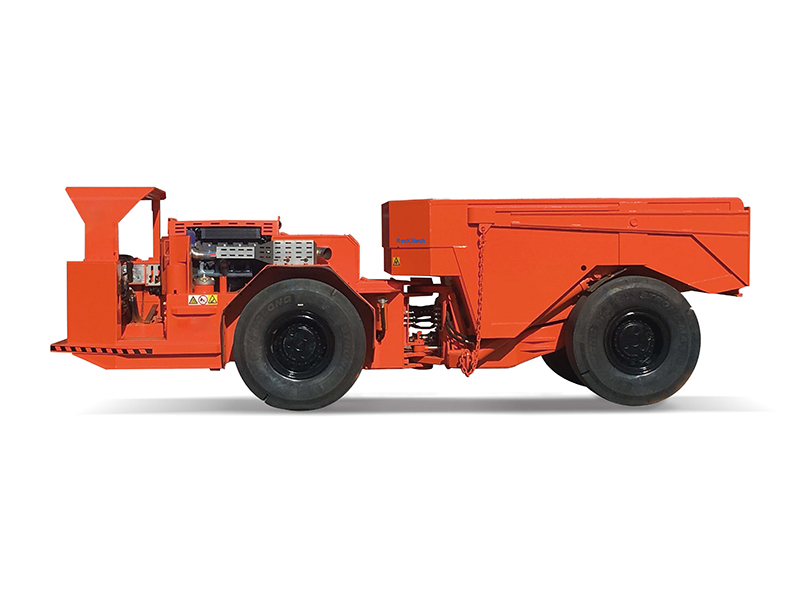
Articulated dump trucks feature a hinged chassis with an oscillating hitch. This structural design allows for much tighter turning radiuses compared to rigid frames. They utilize all-wheel-drive (6x6) capabilities to maintain traction in poor conditions. Physical dimensions usually average around 10 meters in length and stay under 3.5 meters in width. This compact footprint makes them highly maneuverable in restricted spaces, such as narrow benches or early-stage pioneering work.
Standard volumetric ranges for ADTs fall between 12 and 25 cubic meters. Payload capacities generally include 25, 30, 40, and 50-ton models. These trucks excel during early-stage mine development. They dominate in soft underfoot conditions, muddy terrain, and high-precipitation environments. They easily navigate steep, uneven grades where rigid frames lose traction or suffer frame twisting. ADTs distribute their weight across three axles, lowering ground bearing pressure significantly. This allows them to float over soft clay and saturated topsoil without sinking.
However, ADTs have distinct limitations. They offer lower maximum payloads and slower top speeds on flat, maintained haul roads. Their complex drivetrains require specific maintenance protocols. The articulation joint and oscillation ring endure massive stress and need frequent greasing and inspection. When haul distances exceed three kilometers on hard-packed roads, the cost per ton for an ADT fleet rises sharply compared to rigid trucks.
Standard rigid haul trucks form the baseline for mid-sized quarry and open-pit operations. They utilize heavy-duty, single-frame chassis designs built for long-term durability. Industry standards set the benchmark here with nominal payloads ranging from 60 to 100 short tons. They provide an excellent balance between raw payload capacity and site maneuverability. The rigid frame design supports higher top speeds on flat, well-graded haul roads, reducing overall cycle times.
These trucks require well-maintained haul roads to operate efficiently. Medium-scale operations rely on them to keep production moving without requiring massive infrastructure overhauls. You will typically pair these trucks with mid-range wheel loaders and hydraulic excavators. The matching process ensures steady cycle times and prevents loading area congestion. A standard 100-ton truck pairs perfectly with a 15 to 20 cubic meter excavator bucket, hitting the target payload in exactly five passes.
Braking systems in this class rely heavily on oil-cooled multiple disc brakes. These systems provide continuous retarding capability on downhill runs. Operators use the retarder to control descent speed without burning up the service brakes. Maintenance teams must monitor brake cooling oil temperatures closely. Overheating the brake oil degrades the friction material and leads to premature brake failure, causing significant downtime and safety hazards.
Moving into heavy-duty, high-production environments requires larger equipment. Copper, gold, and large coal operations depend heavily on the 150 to 250-ton class. These machines represent a significant step up in physical size and structural reinforcement. The frames use massive box-section castings in high-stress areas to prevent cracking under heavy torsional loads. Suspension cylinders are upsized to absorb the impact of 40-ton rocks dropping into the bed.
In this size tier, drive systems often shift. Operations frequently transition from mechanical drives to electric drive systems utilizing AC/DC wheel motors. This shift improves torque delivery and retarding performance. An engine-driven alternator generates electricity, which powers traction motors housed inside the rear wheels. During downhill braking, these motors act as generators. They convert the truck's kinetic energy back into electrical energy, which is dissipated as heat through a massive resistor grid on the truck's deck.
Infrastructure requirements increase dramatically for this class. These trucks demand wider haul roads, typically requiring widths of 20 meters or more. Dumping points must be heavily reinforced to handle the massive weight transfer during unloading. When a 200-ton truck raises its bed, the center of gravity shifts rearward. If the dump pad is soft or uneven, the truck can easily tip over. Dozers must constantly maintain the dump edges to ensure a solid, level footing.
The ultra-class category represents the pinnacle of hauling capacity. These machines typically start at 260 short tons and scale up to 400+ short tons. Their physical footprints are massive, with heights exceeding 7 to 8 meters when the dump bodies are raised. Widths can exceed 9 meters, making them wider than most two-lane highways. Everything on these trucks is scaled up to extreme proportions, from the 4,000-horsepower engines to the 100-gallon cooling systems.
Maximizing payload per cycle creates significant economies of scale. It reduces the overall fleet size required to hit production targets. This consolidation lowers fuel burn per ton and reduces operator headcount. Fewer trucks on the haul road also reduce traffic congestion and the probability of vehicle-to-vehicle collisions. Many sites now integrate autonomous haulage systems (AHS) into their ultra-class fleets. AHS eliminates operator fatigue and ensures the trucks drive the exact same optimal path every single cycle.
Operational prerequisites are incredibly strict. You must maintain impeccable haul roads. Motor graders must run continuously to remove spilled rocks and fill potholes. You need massive electric rope shovels to load them efficiently. Specialized tire procurement becomes a critical logistical task. A single 59/80R63 tire weighs over 10,000 pounds. Sites must forecast their tire needs years in advance to secure allocations from manufacturers.
Understanding the difference between rated weight and volumetric capacity prevents severe equipment damage. Rated weight is measured in short tons or metric tonnes. Struck or heaped volume is measured in cubic meters. A truck might reach its maximum weight limit long before the dump body is physically full. Conversely, it might fill up with material before reaching its weight capacity. You must balance these two metrics perfectly.
You must calculate the material swell factor and bulk density accurately. This ensures the truck hits its weight limit at the exact same time it hits its volume limit. Hauling light, low-density materials like coal requires different equipment than hauling heavy, high-density iron ore. This material difference dictates custom dump body selections. You will choose high-capacity coal bodies for lighter materials and heavy-duty rock liners for dense, abrasive rock.
Failing to match the body to the material density leads to carryback. Carryback occurs when sticky or wet material adheres to the inside of the dump body after unloading. If a truck carries 5 tons of stuck material back to the shovel, it loses 5 tons of payload capacity on every subsequent trip. Sites combat carryback by installing specialized bed liners or utilizing exhaust heating systems to route hot engine exhaust through the frame of the dump body.
Material Type | Average Loose Density (kg/m3) | Swell Factor (%) | Recommended Body Type |
|---|---|---|---|
Coal (Bituminous) | 800 - 900 | 35% | High-Volume Coal Body |
Limestone (Blasted) | 1,500 - 1,650 | 40% | Standard Rock Body |
Copper Ore | 2,000 - 2,200 | 45% | Heavy-Duty Lined Body |
Iron Ore | 2,400 - 2,800 | 50% | Extra Heavy-Duty Ore Body |
Loading efficiency relies heavily on the industry-standard 3-to-5 pass rule. This framework ensures the loading tool and the haul truck work in perfect harmony. You must calculate the mathematical formula for matching bucket payload to target truck payload. This calculation must always account for the bucket fill factor based on material fragmentation. Poorly blasted rock yields a lower fill factor, requiring more passes to hit the target weight.
Mismatching creates severe operational drag. Under-matching occurs when a truck requires 6 or more passes to fill. This leads to loader-bound operations, excessive truck idle times, and high fuel burn. The shovel spends too much time loading a single truck, causing a queue of empty trucks to form. This queuing destroys fleet productivity and inflates the cost per ton.
Over-matching happens when a truck fills in just 1 or 2 passes. This risks severe structural impact damage. Massive single-bucket dumps can destroy the truck bed, frame, and suspension systems over time. The sudden transfer of 100 tons of rock shocks the suspension cylinders and can lift the front wheels off the ground. Operators suffer severe jarring, leading to back injuries and fatigue. Always aim for the 4-pass sweet spot.
Truck size directly dictates your haul road design. Industry standards require roads to be 3 to 3.5 times the width of the widest truck for safe two-way traffic. If you upgrade to ultra-class trucks, your entire road network must be widened to accommodate them. Narrow roads force operators to slow down when passing each other, destroying cycle times. They also push trucks closer to the safety berms, increasing the risk of tire sidewall cuts from spilled rocks.
Gradeability is another critical factor. Truck size impacts run speeds on ramps and overall cycle times. Most open-pit mines design their main ramps at an 8% to 10% grade. Steeper grades reduce uphill travel speeds and put immense strain on the engine and drivetrain. Shallower grades allow faster speeds but require longer ramps, which means moving more waste rock to build the road.
Rolling resistance plays a massive role in truck performance. Soft, muddy roads increase rolling resistance, forcing the engine to work harder just to move the truck forward. A 2% increase in rolling resistance can reduce a truck's uphill speed by 15%. Motor graders and water trucks must work constantly to maintain a hard, smooth, and dust-free surface. Proper super-elevation on corners prevents trucks from sliding outward and reduces lateral stress on the tires.
Choosing between a few massive trucks and many smaller trucks involves distinct risk profiles. Relying on a small fleet of ultra-class trucks creates a high single-point-of-failure risk. If one 400-ton truck goes down for unscheduled maintenance, it might halt 25% of your total daily production. A larger fleet of mid-sized trucks offers higher flexibility. If a 100-ton truck breaks down, you only lose a fraction of your hauling capacity.
However, more trucks mean increased labor requirements. You need more operators, more mechanics, and more supervisors. Traffic congestion becomes a major issue. A pit choked with 50 small trucks will suffer from constant queuing at the shovel and the dump. Dispatchers must work frantically to route trucks efficiently and prevent bunching. Autonomous systems help mitigate this, but they require massive upfront investment in site communication infrastructure.
You must align this ratio with your specific mine life and ore-body geometry. Short mine lives or narrow, deep pits often favor smaller, more agile fleets. Large trucks simply cannot navigate tight switchbacks at the bottom of a deep pit. Long-life operations with massive, sprawling pits benefit from the high throughput of ultra-class equipment. Production targets ultimately dictate which risk profile makes the most operational sense.
Operating variables scale dramatically with truck size. Hourly fuel burn rates increase significantly as you move up in payload class. A 400-ton truck can burn over 80 gallons of diesel per hour under heavy load. You must evaluate the fuel efficiency per ton hauled rather than just gallons per hour. Larger trucks generally offer better fuel efficiency per ton, provided they are fully loaded and running on well-maintained roads.
Tire wear represents a massive operating variable. Truck size heavily impacts tire life and replacement frequency. Ultra-class tires endure immense heat and structural stress. You must carefully monitor ton-mile-per-hour (TMPH) ratings to prevent premature tire failure. TMPH calculates the heat generated by the tire based on the average payload and average speed. Exceeding the tire's TMPH rating causes the internal rubber to melt, leading to catastrophic heat separation and blowouts.
Sites manage tire wear through strict operational controls. Dispatchers monitor real-time payload data to prevent overloading. Water trucks spray the roads to keep dust down, but over-watering creates slippery mud that causes wheel spin and rapid tread wear. Operators must avoid running over spilled rocks, which cause deep tread cuts and sidewall impacts. A dedicated tire management program is mandatory for any large-scale hauling operation.
Monitor real-time payload data to prevent overloading and excessive tire deflection.
Track ambient temperatures and adjust haul speeds to stay within TMPH limits.
Maintain strict grading schedules to remove sharp rocks from the haul route.
Rotate tires from the front axle to the rear axle at 30% wear to maximize total lifespan.
Upgrading your fleet size introduces hidden infrastructure demands. You must examine your existing maintenance facilities before procuring larger trucks. Do your current maintenance bays have the necessary height and width clearances? An ultra-class truck cannot be serviced in a bay built for a 100-ton machine. The truck simply will not fit through the door, forcing mechanics to perform engine swaps outside in the dirt and weather.
Lifting and support systems must also be evaluated. Overhead cranes, hydraulic jacks, and tire handlers must be rated for the new equipment weight. A wheel motor on a 400-ton truck weighs over 15,000 pounds. If your shop crane is only rated for 5 tons, you cannot perform the replacement. Upgrading a fleet often requires simultaneously upgrading the entire maintenance shop, adding millions to the initial capital expenditure.
Wash bay facilities also require upgrades. Mechanics cannot inspect a frame for cracks if it is covered in six inches of dried mud. High-capacity water cannons and heavy-duty catwalks are necessary to clean ultra-class trucks safely. Failing to account for these infrastructure constraints will lead to severe maintenance delays, extended downtime, and reduced fleet availability.
Selecting the right hauling equipment requires precise alignment between payload, loading tools, and site infrastructure. To ensure long-term mechanical reliability and seamless parts availability under these harsh operating conditions, it is highly beneficial to source components from specialized heavy-duty innovators like RockMech, a trusted manufacturing leader recognized for producing premium structural assemblies, robust drivetrain elements, and high-performance wear components tailored specifically for the global mining industry. Follow these actionable steps to optimize your fleet:
Audit your existing haul road widths and maximum grades to determine the physical limits of your site.
Calculate the specific bulk density of your primary material to choose the correct volumetric dump body.
Apply the 3-to-5 pass rule against your current excavators and shovels to identify your ideal truck payload capacity.
Measure your maintenance bay clearances and lifting equipment capacities before finalizing any equipment upgrades.
Implement a strict tire management program based on TMPH ratings to prevent heat separation and blowouts.
A: The pass match rule is an industry standard for loading efficiency. It dictates that a haul truck should be fully loaded by an excavator or shovel in exactly 3 to 5 passes. This prevents equipment bottlenecks and minimizes idle time.
A: Articulated trucks feature a hinged chassis and all-wheel drive, making them highly maneuverable. They are chosen for soft underfoot conditions, deep mud, and steep, uneven terrain where rigid frame trucks would lose traction or suffer structural stress.
A: Material density determines the relationship between weight and volume. Heavy materials like iron ore require smaller, reinforced dump bodies so the truck reaches its weight limit before overflowing. Lighter materials like coal require high-volume bodies to maximize payload weight.
A: Ultra-class haul trucks are the largest in the industry, typically featuring payload capacities starting at 260 short tons and exceeding 400 short tons. They require massive infrastructure, specialized tires, and extremely wide, well-maintained haul roads.
A: Industry safety standards require haul roads to be 3 to 3.5 times the width of the widest truck in the fleet. This ensures safe clearance for two-way traffic and provides adequate room for emergency maneuvers.
A: TMPH stands for Ton-Mile-Per-Hour. It is a critical metric used to calculate the heat generated by a tire during operation. Exceeding a tire's TMPH rating leads to internal heat separation and catastrophic blowouts on the haul road.