Views: 0 Author: Site Editor Publish Time: 2026-07-10 Origin: Site
Heavy construction, mining, and fleet procurement professionals frequently conflate the terms haul truck and dump truck. Misidentifying equipment classifications during the procurement or rental process leads to severe payload bottlenecks, regulatory compliance failures such as DOT violations, or unnecessary capital expenditure on oversized machinery. In the United States, industry standards recognize a distinct terminology nuance. The term haul truck is the preferred classification for strictly off-road, heavy-duty earthmovers. Conversely, a dump truck encompasses a broader category including both on-highway commercial vehicles and smaller off-highway utility vehicles. You must establish a rigorous framework for evaluating equipment based on payload requirements, site terrain, and road legality to ensure the correct asset is deployed for the project.
Categorical Distinction: All haul trucks are technically dump trucks, but not all dump trucks are haul trucks. "Haul truck" specifically denotes heavy-duty, strictly off-highway vehicles designed for high-production environments.
Payload Discrepancy: Standard on-highway dump trucks typically max out between 10 and 25 tons, whereas off-highway haul trucks are engineered to transport 60 to over 500 tons.
Regulatory Boundaries: Standard dump trucks are designed to comply with local axle-weight limits and highway bridge laws; haul trucks are strictly confined to closed sites, mines, and purpose-built haul roads.
Terrain and Maneuverability: Rigid haul trucks trade maneuverability for massive capacity on stable surfaces, while articulated dump trucks (ADTs) offer superior terrain navigation and lower rental costs for smaller earthmoving volumes.
Table of Contents
We define the haul truck as an off-road, heavy-duty utility vehicle engineered for high-production mining and exceptionally demanding construction environments. Engineers design these massive machines specifically for moving maximum tonnage per hour. They are not built for standard commercial applications. Instead, they thrive where raw material volume dictates project pacing and overall site productivity.
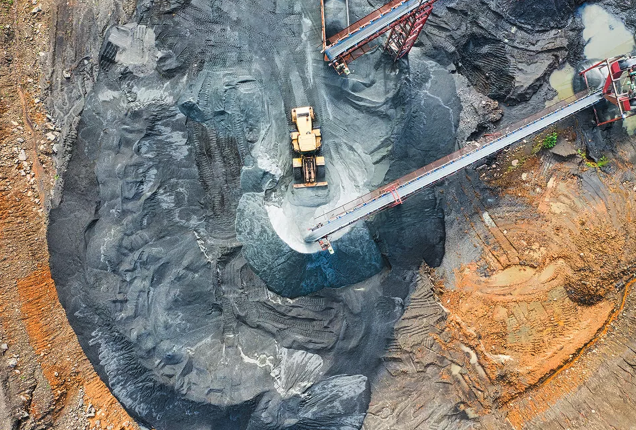
Primary use cases for these vehicles include large surface mines, deep quarries, and massive civil engineering projects like dam construction or major highway cuts. You will find them moving overburden, transporting blasted rock, and feeding primary crushers. They operate continuously in closed-loop cycles to maximize production efficiency. The entire site layout often revolves around their turning radius and dumping requirements.
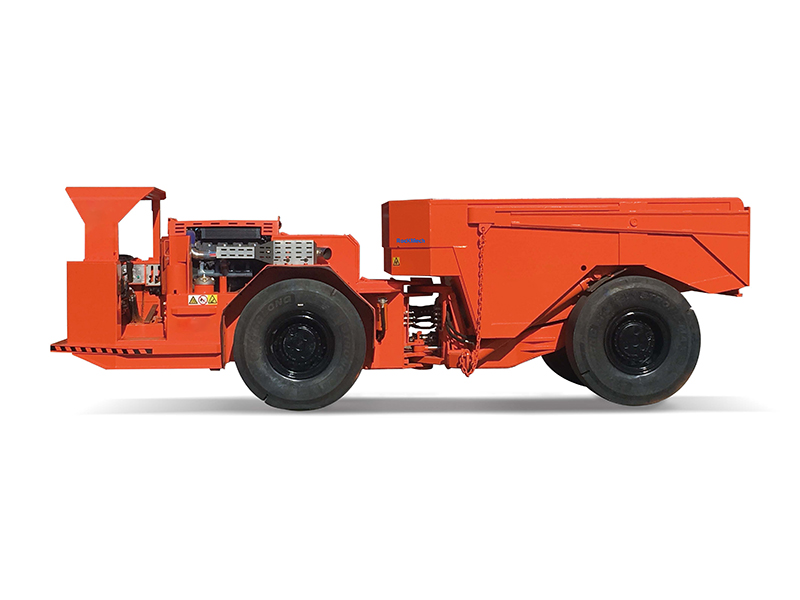
Structural differences clearly separate them from standard vehicles. They feature oversized heavy-duty tires that often stand taller than a standard pickup truck, requiring specialized handling equipment just for tire changes. Their specialized drivetrains frequently utilize diesel-electric systems in ultra-class models, where a massive diesel engine acts as a generator to power electric wheel motors. Most importantly, they completely lack standard road-safety homologation. You will not find highway-legal lighting, standard bumpers, or DOT-approved braking systems on these machines.
We define the standard dump truck as an on-highway, road-legal commercial vehicle. Manufacturers build these trucks on standard commercial chassis, similar to those used for freight haulers or concrete mixers. They are designed to operate safely among civilian traffic while transporting bulk materials from off-site quarries or batch plants directly to the job site.
Primary use cases revolve around public infrastructure and localized development. You will commonly see them handling municipal construction, residential earthmoving, and material delivery. They transport gravel, sand, and asphalt across public roads daily. Their ability to navigate standard intersections and highway ramps makes them the backbone of urban and suburban construction logistics.
Structural differences focus heavily on regulatory compliance. They utilize a standard commercial truck chassis with conventional diesel powertrains and mechanical transmissions. They feature multiple axle configurations, including single-axle, tandem, tri-axle, or quad-axle setups. Engineers design these specific configurations to meet regional DOT weight distribution laws and federal bridge formulas, ensuring the vehicle does not damage public infrastructure.
Feature | Heavy-Duty Off-Road Models | Standard Commercial Models |
|---|---|---|
Primary Environment | Strictly Off-Highway / Closed Sites | On-Highway / Mixed Public Use |
Typical Payload Range | 60 to 500+ Tons | 10 to 25 Tons |
Chassis Architecture | Purpose-Built Heavy Duty Frame | Standard Commercial Truck Chassis |
Regulatory Status | Non-Road Legal (MSHA/OSHA governed) | DOT Compliant / Street Legal |
Drivetrain Technology | Mechanical or Diesel-Electric | Standard Mechanical Diesel |
The payload range of rigid frame models is massive, spanning from 60 to over 500 tons. This extreme capacity requires careful operational planning. You cannot simply deploy these machines without matching them to the correct loading equipment. An unmatched fleet results in trucks idling at the loading face or excavators waiting for trucks to return, both of which destroy site efficiency.
You must match capacity with loading equipment to achieve optimal cycle times. Industry best practices dictate a 3-to-4 pass match with hydraulic excavators or large wheel loaders. If your excavator takes seven passes to fill the truck bed, your loading tool is undersized, and the truck spends too much time sitting still. If it takes only one pass, your truck is too small, and you risk severe impact damage to the truck suspension.
Operators must carefully weigh the inherent trade-offs. You gain massive payload capacity, but you suffer a significant reduction in tight-space maneuverability. These machines require wide turning radiuses, expansive loading zones, and massive dump areas to function effectively. They cannot perform tight three-point turns on narrow benches.
The payload range of standard commercial models is much smaller, typically falling between 10 and 25 tons. This capacity is strictly governed by vehicle design and legal weight limits imposed by local and federal transportation authorities. Exceeding these limits results in severe penalties and immediate out-of-service orders.
Configuration directly dictates capacity. A single-axle truck is highly maneuverable but limited to 7-10 tons, making it ideal for tight residential driveways. Tandem and tri-axle trucks serve as standard workhorses, handling 15-22 tons for general construction. Super dumps utilize multi-axle configurations with trailing axles. These specialized setups legally haul up to 26 or more tons under federal bridge formulas by spreading the load over a much longer wheelbase.
Axle configurations and local bridge laws dictate the maximum legal gross vehicle weight (GVW). You must distribute the weight across multiple axles to prevent infrastructure damage. Fleet managers must constantly monitor payload weights via onboard scales or wheel loaders equipped with scale systems to ensure every load leaving the site is strictly street legal.
You must utilize a strict framework for calculating capacity based on material density. Volume measured in cubic yards does not always equal weight measured in tons. A truck bed might hold 20 cubic yards of material, but the actual weight varies drastically based on exactly what you are hauling. You must know your material density before loading.
Hauling wet clay versus loose gravel heavily impacts your choice of truck bed design, liner material, and payload limits. Wet clay is dense, sticky, and heavy. It requires specialized liner materials or heated beds to ensure clean dumping and prevent carryback. Loose gravel is lighter and flows easily. You will reach your maximum weight limit much faster with wet clay than with dry topsoil, often maxing out the suspension long before the truck bed is physically full.
Determine the exact cubic yard capacity of the truck bed (struck vs. heaped).
Identify the specific bank weight and loose weight of the material being excavated.
Calculate the swell factor of the material once it is disturbed by the excavator.
Multiply the loose cubic yard weight by the bed capacity to find the total potential payload weight.
Compare the calculated payload weight against the maximum rated suspension capacity of the vehicle.
You must provide specific infrastructure to support heavy-duty off-highway operations. This requires the meticulous engineering and maintenance of dedicated haul roads. You must carefully calculate road width, maximum grade, and rolling resistance. A poorly maintained haul road destroys tires, increases fuel consumption, and drastically reduces the overall speed of the fleet.
Ground bearing pressure is a critical metric for site engineers. You must provide stable, well-graded terrain for rigid frame models. Operating on soft or rutted ground causes severe frame stress and suspension damage. It also drastically increases the risk of catastrophic tire blowouts, which halt production immediately and introduce severe safety hazards to the maintenance crew.
Dedicated motor graders and water trucks must constantly patrol the haul routes. Graders remove spills and smooth out ruts, while water trucks suppress dust to maintain operator visibility. This support equipment is absolutely mandatory; you cannot run a high-capacity fleet without simultaneously running a dedicated road maintenance program.
Operating standard commercial models requires strict adherence to DOT regulations. Street legality is mandatory. Operators must possess valid commercial driver's licenses (CDLs) with appropriate endorsements. The vehicles must undergo regular inspections for brake wear, tire tread depth, and lighting functionality.
Maneuverability in tight urban environments is a major advantage for these vehicles. They navigate standard intersections, adhere to bridge weight limits, and seamlessly integrate into public traffic flows. This flexibility makes them indispensable for municipal and residential projects where material must be imported or exported through active civilian neighborhoods.
Site access for these vehicles requires different planning. While they don't need massive haul roads, they do require stable entry and exit points to prevent tracking mud onto public highways. You must install rumble strips, wheel washes, or heavy aggregate tracking pads at the site exit to maintain compliance with local environmental regulations.
Rigid models achieve success through high capacity, ranging from 60 to 500+ tons. They excel on long haul distances over well-maintained haul roads. They are ideal for large-scale mining operations where raw volume per trip outweighs maneuverability. Their simple, robust frame design handles massive impact loads from large mining shovels.
However, they have distinct limitations. They exhibit poor performance on soft or un-graded ground. Their wide turning radius restricts them from tight spaces. Furthermore, they require a high initial infrastructure cost to build capable haul roads. If your site features steep, muddy inclines or narrow switchbacks, a rigid frame model will fail to perform and likely become stuck.
Articulated models achieve success through extreme off-road capabilities. They dominate in soft, muddy terrain and on steep inclines. Their articulation joint allows for tight maneuvering, and their six-wheel-drive systems keep them moving through deep ruts. They are often the most cost-effective rental solution for moving moderate amounts of dirt per trip on early-stage civil projects.
Their limitations include a lower maximum payload compared to rigid trucks. They typically cap around 40-60 tons. Additionally, they feature higher mechanical complexity at the oscillation and articulation joint, requiring specialized maintenance. The articulation joint must be greased regularly, and the complex driveline requires careful monitoring to prevent premature failure.
You must carefully analyze the upfront costs of purchasing ultra-class equipment versus standard commercial vehicles. Ultra-class machines require massive capital investment and long lead times for manufacturing. Standard commercial trucks represent a much lower barrier to entry and are readily available on dealer lots.
Evaluate the rental market carefully. Renting articulated dump trucks is highly economical for short-term heavy civil projects. This avoids the massive transport and mobilization costs associated with moving rigid frame models to temporary sites. When the earthmoving phase is complete, you simply return the articulated models off-rent.
You must evaluate fuel consumption rates continuously. Heavy equipment burns hundreds of gallons of diesel per shift. Specialized tire replacement costs, specifically for Off-The-Road (OTR) tires, represent a massive ongoing expense. Preventative maintenance schedules must be strictly followed to prevent costly downtime, including regular oil sampling and hydraulic system inspections.
Compare the cost-per-ton moved to determine fleet efficiency. Calculate the threshold where a single high-capacity machine becomes more economical than a fleet of smaller, on-highway vehicles. Fewer operators moving more material often yields better long-term margins on massive sites, provided the haul roads can support the larger equipment.
Transporting non-road-legal equipment to job sites presents a massive logistical challenge. It requires heavy-haul trailers, pilot cars, and specialized permits. In many cases, ultra-class machines require partial disassembly and reassembly on-site, adding significant mobilization costs and requiring heavy lift cranes just to put the truck together.
Route planning for mobilization is critical. You must survey the entire transport route for bridge height clearances, weight restrictions, and tight corners. Failing to properly plan the heavy-haul route results in stranded equipment, massive delays, and potential damage to public infrastructure during transport.
Off-highway operators require specialized training. You must focus heavily on managing massive blind spots, calculating extended braking distances, and mitigating rollover risks on steep grades. Operating a 100-ton machine requires a completely different skill set than driving a standard commercial vehicle.
Implement strict mitigation strategies immediately. Utilize collision avoidance systems, proximity sensors, and comprehensive camera arrays. Enforce rigorous site traffic management plans to separate heavy equipment from light vehicles and ground personnel. Establish clear communication protocols and mandatory radio call-outs at all intersections and loading zones.
Conduct a comprehensive site survey to evaluate ground conditions and haul road viability before selecting equipment. Calculate required cycle times and match your loading tools to your hauling assets to prevent production bottlenecks. Consult with specialized heavy equipment dealers to finalize your fleet configuration based on exact material density and volume requirements. Review all local DOT regulations and bridge weight limits if your route requires any travel on public infrastructure.
As an innovative world leader in maximizing industrial operational safety and dynamic site configurations, RockMech engineers advanced heavy-duty structural framework solutions designed to optimize high-capacity earthmoving layouts, ensuring premier component performance and peak operator risk mitigation across tough off-highway territories.
A: No, a standard Commercial Driver's License (CDL) is not legally required to operate a haul truck on private, off-highway job sites or mines. However, operators must undergo specialized, site-specific safety training (such as MSHA Part 46/48 for mining environments) and equipment-specific certifications.
A: A rigid haul truck can carry between 60 and 500+ tons of material. In contrast, a standard on-highway dump truck is limited by road regulations and axle configurations, typically carrying between 10 and 25 tons.
A: An ADT features a pivot joint between the cab and the dump body, allowing all-wheel-drive contact and exceptional maneuverability on soft, uneven terrain. A rigid haul truck has a fixed chassis, offering significantly higher payload capacity but requiring stable, well-maintained haul roads and a wider turning radius.
A: No. Haul trucks exceed legal vehicle width, height, and axle-weight limits. They lack standard DOT safety features like highway lighting and braking systems, making them strictly non-road-legal.
A: Axle configurations distribute the vehicle’s weight to meet federal and state bridge laws. A single-axle dump truck is limited to about 7-10 tons of payload, a tandem-axle can carry 15-20 tons, and a tri-axle or quad-axle configuration can legally carry up to 22-25 tons by spreading the load over more contact points.
A: Major maintenance costs include specialized Off-The-Road (OTR) tire replacements, hydraulic cylinder rebuilds, drivetrain wear on steep haul grades, and heavy fuel consumption.