


Views: 0 Author: Site Editor Publish Time: 2025-10-06 Origin: Site
Have you ever wondered how the world gets access to minerals buried deep underground? While surface mining works for shallow deposits, underground mining is essential for reaching deeper, more complex resources. As industries increasingly depend on precious metals, coal, and rare earth elements, the demand for underground mining grows.
In this guide, we’ll explore how underground mining works, focusing on methods, challenges, and technologies like the underground dump truck. You’ll gain insights into how mining operations are evolving and why this technique is crucial to the global economy.
Surface mining involves the removal of soil, rock, and other materials (referred to as overburden) to access minerals near the Earth's surface. While this method is effective for shallow mineral deposits, it can have a significant environmental impact, disrupting ecosystems and landscapes. On the other hand, underground mining requires the creation of tunnels and shafts to reach deeper mineral deposits, typically those found hundreds or even thousands of feet below the surface. While more expensive and time-consuming, underground mining minimizes surface disruption and is often the only viable method for accessing valuable resources that are located at greater depths beneath the Earth's surface. In essence, surface mining is best suited for shallow resources, while underground mining is reserved for deeper and more complex deposits that require specialized equipment and techniques.
| Feature | Surface Mining | Underground Mining |
|---|---|---|
| Method | Removal of soil, rock, and overburden to access minerals | Creation of tunnels and shafts to access deep mineral deposits |
| Best Suited For | Shallow mineral deposits | Deep, complex mineral deposits |
| Environmental Impact | Significant disruption to ecosystems and landscapes | Minimal surface disruption, but potential underground risks |
| Cost | Less expensive and quicker | More expensive and time-consuming |
| Resources Accessed | Shallow resources near the surface | Valuable resources deep underground |
| Equipment Required | Basic heavy machinery (excavators, trucks) | Specialized equipment (tunnels, shafts, advanced mining trucks) |
| When Used | For deposits that are easily accessible | For deposits that cannot be reached by surface mining methods |
With rising global demand for resources such as gold, copper, and coal, underground mining has become increasingly critical. As mineral deposits on the surface are depleted or exhausted, industries and technology sectors turn to underground mining to access vital resources that are deep beneath the Earth’s surface. Furthermore, underground mining allows for the extraction of higher-grade ores that are not accessible through surface mining methods. These high-grade ores are in demand across a wide variety of industries, from manufacturing and construction to technology and renewable energy sectors.
Additionally, underground mining has gained further importance due to urbanization and industrialization, which has placed increased pressure on the availability of easily accessible mineral resources. The ability to access deeper and more valuable resources is vital for meeting the global supply chain demands of industries that rely on these materials, such as electronics manufacturing, the renewable energy industry, and the automotive sector.
Underground mining refers to the process of extracting minerals or ores from deep beneath the Earth’s surface. Unlike surface mining, which involves removing overlying materials to access mineral deposits, underground mining involves the creation of tunnels, shafts, or ramps to reach deposits that are located deep within the Earth. This method is essential for extracting materials that are too deep for surface mining techniques to access, including high-value ores such as gold, diamonds, copper, and coal.
Brief History: Over the centuries, mining techniques and technologies have advanced significantly. Today, underground mining is a highly specialized field requiring sophisticated machinery, ventilation systems, and rigorous safety protocols. The evolution of mining methods has enabled more efficient and safer extraction of materials, even in the most challenging and remote environments.
Main Methods and Techniques: The main underground mining techniques include shaft mining, drift mining, slope mining, and room-and-pillar mining. These methods vary based on the type of deposit, the depth of the mineral, and the surrounding geology. Each technique has its own advantages and challenges, and mining companies carefully select the most appropriate method for each mining operation to ensure maximum efficiency and safety.
Underground mining offers several advantages over surface mining, particularly when dealing with deeper mineral deposits that cannot be accessed through conventional methods.
Access to Deeper Resources: Underground mining is ideal for reaching valuable mineral resources that are buried too deep for surface mining techniques. This method allows mining companies to access deposits that may otherwise be inaccessible, thereby ensuring the continued supply of essential minerals.
Minimal Surface Disruption: Compared to surface mining, underground mining causes less environmental disruption. This makes it a more sustainable option, particularly in areas where surface mining would have a devastating impact on local ecosystems and communities. By keeping mining operations underground, companies can preserve the natural landscape while still extracting valuable minerals.
Targeting Higher-Grade Ores: Underground mining is often the best option for accessing high-grade ores that are located deep within the Earth. These ores contain a higher concentration of the desired mineral, making them more economically viable to extract. By focusing on these rich deposits, mining companies can maximize the return on investment and ensure the efficient use of resources.
Shaft mining is one of the oldest and most widely used underground mining methods, particularly for deep mineral deposits. This technique involves sinking vertical shafts into the Earth to reach the ore body. The main advantage of shaft mining is its ability to access deep mineral deposits that are located hundreds or thousands of feet below the surface.
Shaft mining is commonly used for extracting valuable minerals like gold, coal, and other metals found at significant depths. However, it is resource-intensive and requires large amounts of capital and time to construct the necessary shafts. Additionally, shaft mining can be challenging due to the risks of cave-ins and the need for constant ventilation to ensure miners’ safety.
Drift mining is a horizontal mining technique used to access mineral deposits that are located on the side of a mountain or hill. Instead of digging a vertical shaft, drift mining involves the creation of horizontal tunnels that provide direct access to the ore body. This method is particularly useful for ore bodies located in sloping or horizontal seams. Drift mining is ideal for ore bodies that are located near the surface but are not accessible through surface mining methods. It is commonly used for extracting coal and metals in horizontal seams, where traditional surface mining would not be practical or feasible.
Slope mining involves creating an inclined shaft or slope that provides access to mineral deposits located at shallow depths. This method is typically used when the ore body is too deep for surface mining but not deep enough to require vertical shaft mining. Slope mining is a cost-effective alternative to shaft mining and can be completed in a shorter time frame.Slope mining is typically employed for deposits located in areas where the ore body is shallow and surface mining is not feasible due to geological constraints. It is also used for more accessible minerals that do not require deep vertical shafts.
Room-and-pillar mining is primarily used in coal mines and involves excavating rooms of ore while leaving pillars of ore behind to support the mine's roof. This method is often used for relatively flat-lying ore bodies and is highly efficient.This technique is most effective for mining coal and other materials in horizontal seams. It requires careful planning to ensure the stability of the mine while extracting large quantities of ore. By leaving pillars of ore in place, miners can maintain structural integrity while continuing to extract valuable minerals.
| Mining Method | Description | Common Uses | Challenges |
|---|---|---|---|
| Shaft Mining | Vertical shafts to access deep deposits | Gold, coal, deep minerals | Expensive, time-consuming, resource-intensive |
| Drift Mining | Horizontal tunnels to access sloped ore bodies | Coal, metals in horizontal seams | Limited to shallow ore bodies |
| Slope Mining | Inclined shafts to access shallow resources | Shallow ore bodies | Limited to areas with shallow deposits |
| Room-and-Pillar | Excavating rooms with support pillars | Coal | Requires careful planning to maintain mine stability |
Underground mining operations require specialized equipment that is designed to withstand the harsh conditions of the mine. Essential equipment used in underground mining includes:
Drills: Used for drilling holes into ore bodies and rocks to facilitate the extraction process.
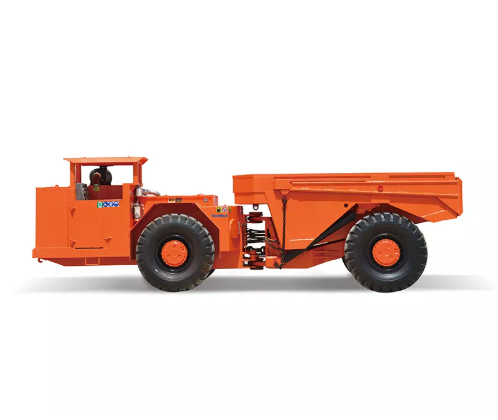
Underground Dump Trucks (Underground Dump Truck): These trucks are crucial for transporting ore, waste, and materials throughout the mine. They are specifically designed to navigate narrow and steep underground tunnels while carrying heavy loads.
Haul Trucks: Larger trucks used for transporting bulk materials from underground mines to the surface for processing.
Selecting the right underground dump truck is vital for ensuring operational efficiency and safety. Several factors need to be considered when making this choice:
Types of Dump Trucks: There are rigid, articulated, and electric dump trucks. Each type has unique advantages depending on the mining environment. Electric trucks are increasingly popular due to their zero emissions and suitability for underground spaces with limited ventilation.
| Dump Truck Type | Description | Best Use Case | Key Features |
|---|---|---|---|
| Rigid | Rigid frame, simple design | Deep mining, high-capacity loads | High load capacity, durable, straightforward |
| Articulated | Flexible frame with a joint between front and rear | Navigating tight spaces and gradients | Maneuverability, easier to turn in confined spaces |
| Electric | Powered by electricity, no emissions | Ventilated underground environments | Zero emissions, lower maintenance, eco-friendly |
Key Features to Look For: Look for dump trucks with high load capacity, strong traction, and good maneuverability to navigate tight and steep underground spaces. Additionally, consider fuel efficiency, maintenance requirements, and overall operational costs to ensure long-term sustainability.
Operational Considerations: Ensure that the dump truck can handle the specific challenges of your mining site, including navigating steep gradients, tight turns, and transporting heavy materials.
Maintenance is crucial to keeping underground mining equipment running efficiently and ensuring the safety of workers.Regular checks of equipment components such as tires, hydraulic systems, and braking components are necessary to prevent failures and maintain smooth operation. Operators should follow a comprehensive maintenance schedule and ensure that all equipment is inspected and repaired as necessary to minimize downtime and ensure safety.
Safety is of utmost importance in underground mining operations. Key safety measures include:
Personal Protective Equipment (PPE): Workers must wear helmets, gloves, respiratory protection, and flame-resistant clothing to reduce the risk of injury and exposure to harmful substances.
Emergency Procedures: Clear emergency exit routes, fire suppression systems, and communication systems are critical for ensuring the safe evacuation of workers in case of emergencies.
While underground mining is less disruptive than surface mining, it still poses risks to the environment:Mining processes can lead to the contamination of local water supplies if waste materials are not managed properly. Mining activities can destabilize the surrounding soil, leading to erosion and potential ecosystem disruption.
As environmental concerns continue to grow, the mining industry is making a concerted effort to shift towards more sustainable and eco-friendly practices. One of the most promising developments in this regard is the adoption of electric underground dump trucks, which offer zero emissions and significantly reduce the environmental footprint of mining operations.
Underground mining is crucial for extracting resources needed by modern industries. Despite challenges, technological advancements are improving its safety, efficiency, and environmental impact. As global mineral demand grows, underground mining will continue to be vital for resource extraction.
At RockMech, the company's mining equipment, including specialized underground dump trucks, enhances operational efficiency while minimizing environmental impact. With innovative solutions, RockMech ensures that mining operations are both productive and sustainable, offering valuable products to meet the industry's evolving needs.
A: Underground mining extracts minerals from deep beneath the Earth's surface using tunnels and shafts.
A: It provides access to deeper, valuable resources that surface mining cannot reach.
A: An underground dump truck transports materials in mining tunnels, designed for confined spaces.
A: Advancements like electric underground dump trucks and improved ventilation make it safer and more efficient.


